
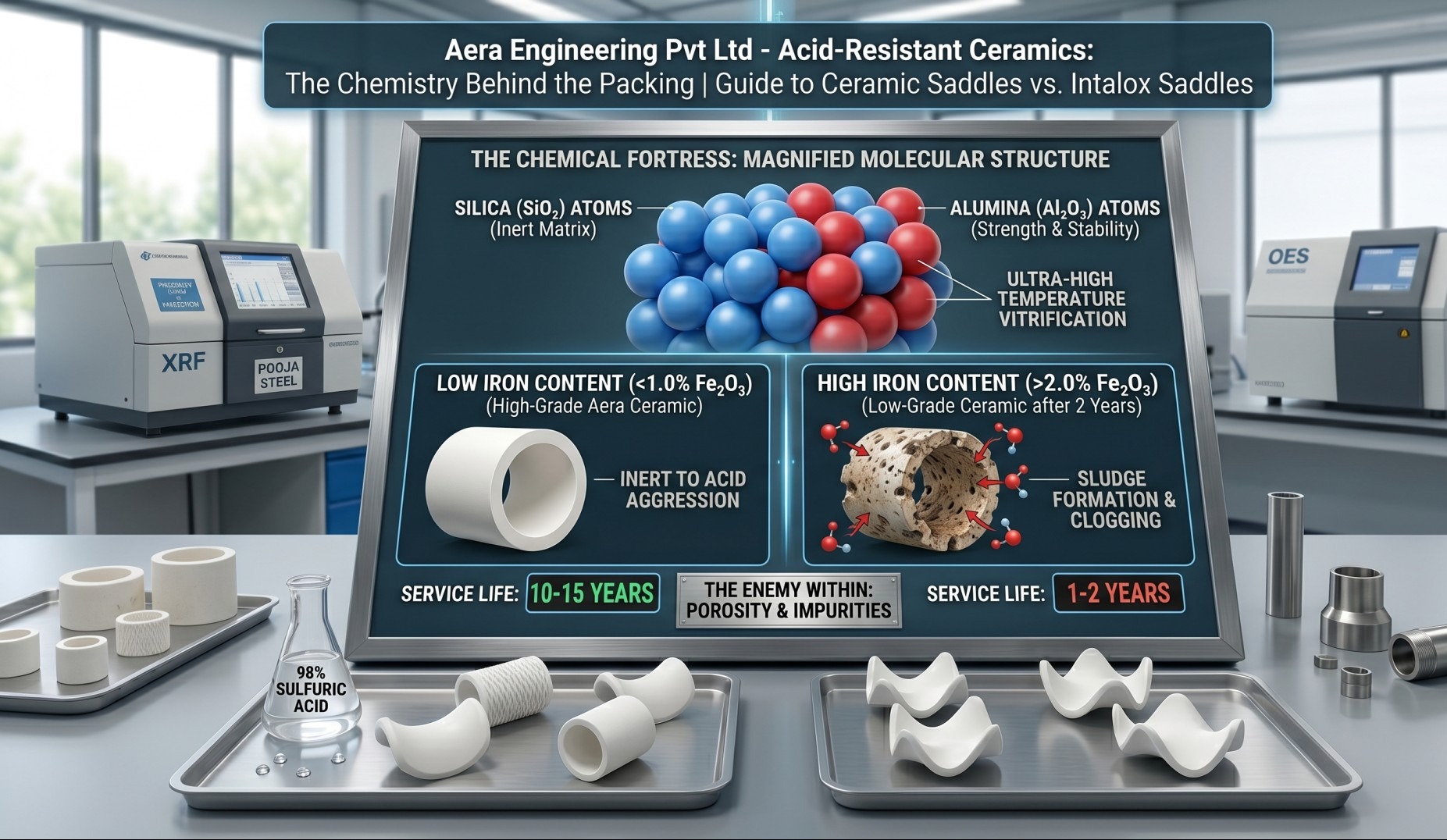
In the corrosive belly of a chemical processing plant, material survival is a battle of chemistry. When a tower is filled with concentrated sulfuric acid or boiling hydrochloric acid, most materials don't just fail—they dissolve. For Aera Engineering Pvt Ltd, ensuring the longevity of these systems depends on one specific class of materials: Acid-Resistant Technical Ceramics. But what exactly makes these ceramics 'acid-proof'? It isn't just luck; it is a precisely engineered chemical composition designed to remain inert in the face of molecular aggression. The Chemical Fortress: Silica and Alumina The secret to acid resistance lies in the 'Glassy Phase' and the crystalline structure of the ceramic. Most high-performance tower packings, such as Raschig Rings or Intalox Saddles, are composed primarily of Silica (SiO_2) and Alumina (Al_2O_3). The Role of Silica: Silica is naturally resistant to almost all acids (with the notable exception of Hydrofluoric acid). It forms a stable, non-reactive matrix that prevents acid molecules from penetrating the bulk of the material. The Role of Alumina: Adding Alumina increases the mechanical strength and thermal shock resistance of the packing. It ensures the rings don't crumble under the weight of a 50-foot bed or crack during a sudden temperature spike. The Enemy Within: Porosity and Iron Content Chemical resistance isn't just about what is in the ceramic; it's about what isn't. 1. Zero Porosity (The Sealing Effect) If a ceramic is porous, acid can seep into the microscopic 'pores' and attack the material from the inside out. This leads to internal pressure and eventual crumbling. The Aera Standard: At Aera Engineering, we utilize ceramics fired at ultra-high temperatures (vitrification). This process fuses the particles so tightly that the material becomes non-porous, effectively locking the acid out. 2. Low Iron (Fe_2O_3) and Lime (CaO) Content Iron and Lime are 'acid-loving' impurities. If a ceramic packing has high iron content, the acid will react with these impurities, causing the packing to discolor, weaken, and eventually turn into a sludge that clogs the tower. The Chemistry: High-quality acid-resistant ceramics maintain iron content below 1%, ensuring that there is virtually nothing for the acid to react with. The Engineering Verdict for Aera Engineering Pvt Ltd For our manufacturing operations in Vadodara, selecting acid-resistant ceramics is a non-negotiable step in tower design. As we expand our industrial exports to the Middle East and beyond, the chemical integrity of our components is what builds our reputation. Why Chemistry Matters: When you choose a packing based on its chemical composition, you are choosing reduced downtime. A tower packed with low-quality ceramic might need a complete overhaul every 2 years. A tower packed with Aera-spec acid-resistant ceramic can run for 10 to 15 years without significant degradation. Conclusion: Built to Endure At Aera Engineering Pvt Ltd, we believe that engineering starts at the molecular level. By understanding the chemistry behind our ceramic packings, we provide our clients with more than just hardware—we provide chemical peace of mind. Is your tower packing underperforming? The culprit might be the chemistry. Contact the technical team at Aera Engineering today for a material analysis and a quote on the most chemically inert tower internals in the industry. Acid-Resistant Ceramics, Aera Engineering Pvt Ltd, Chemical Composition of Tower Packing, Silica Alumina Ceramics, Sulfuric Acid Resistance, Industrial Ceramic Manufacturers India, Vitrified Ceramic Packing.


This is your website preview.
Currently it only shows your basic business info. Start adding relevant business details such as description, images and products or services to gain your customers attention by using Boost 360 android app / iOS App / web portal.
Acid-Resistant Ceramics: The Chemistry Behind the Packing
2026-04-25T12:30:06
In the corrosive belly of a chemical processing plant, material survival is a battle of chemistry. When a tower is filled with concentrated sulfuric acid or boiling hydrochloric acid, most materials don't just fail—they dissolve. For Aera Engineering Pvt Ltd, ensuring the longevity of these systems depends on one specific class of materials: Acid-Resistant Technical Ceramics. But what exactly makes these ceramics 'acid-proof'? It isn't just luck; it is a precisely engineered chemical composition designed to remain inert in the face of molecular aggression. The Chemical Fortress: Silica and Alumina The secret to acid resistance lies in the 'Glassy Phase' and the crystalline structure of the ceramic. Most high-performance tower packings, such as Raschig Rings or Intalox Saddles, are composed primarily of Silica (SiO_2) and Alumina (Al_2O_3). The Role of Silica: Silica is naturally resistant to almost all acids (with the notable exception of Hydrofluoric acid). It forms a stable, non-reactive matrix that prevents acid molecules from penetrating the bulk of the material. The Role of Alumina: Adding Alumina increases the mechanical strength and thermal shock resistance of the packing. It ensures the rings don't crumble under the weight of a 50-foot bed or crack during a sudden temperature spike. The Enemy Within: Porosity and Iron Content Chemical resistance isn't just about what is in the ceramic; it's about what isn't. 1. Zero Porosity (The Sealing Effect) If a ceramic is porous, acid can seep into the microscopic 'pores' and attack the material from the inside out. This leads to internal pressure and eventual crumbling. The Aera Standard: At Aera Engineering, we utilize ceramics fired at ultra-high temperatures (vitrification). This process fuses the particles so tightly that the material becomes non-porous, effectively locking the acid out. 2. Low Iron (Fe_2O_3) and Lime (CaO) Content Iron and Lime are 'acid-loving' impurities. If a ceramic packing has high iron content, the acid will react with these impurities, causing the packing to discolor, weaken, and eventually turn into a sludge that clogs the tower. The Chemistry: High-quality acid-resistant ceramics maintain iron content below 1%, ensuring that there is virtually nothing for the acid to react with. The Engineering Verdict for Aera Engineering Pvt Ltd For our manufacturing operations in Vadodara, selecting acid-resistant ceramics is a non-negotiable step in tower design. As we expand our industrial exports to the Middle East and beyond, the chemical integrity of our components is what builds our reputation. Why Chemistry Matters: When you choose a packing based on its chemical composition, you are choosing reduced downtime. A tower packed with low-quality ceramic might need a complete overhaul every 2 years. A tower packed with Aera-spec acid-resistant ceramic can run for 10 to 15 years without significant degradation. Conclusion: Built to Endure At Aera Engineering Pvt Ltd, we believe that engineering starts at the molecular level. By understanding the chemistry behind our ceramic packings, we provide our clients with more than just hardware—we provide chemical peace of mind. Is your tower packing underperforming? The culprit might be the chemistry. Contact the technical team at Aera Engineering today for a material analysis and a quote on the most chemically inert tower internals in the industry. Acid-Resistant Ceramics, Aera Engineering Pvt Ltd, Chemical Composition of Tower Packing, Silica Alumina Ceramics, Sulfuric Acid Resistance, Industrial Ceramic Manufacturers India, Vitrified Ceramic Packing.
2026-04-25T12:30:06


Submit Your Enquiry