
When designing a distillation or absorption tower, the choice of random packing material can be the difference between a high-efficiency plant and a maintenance nightmare. While the cylindrical shape of the Raschig ring is a century-old classic, the material—Ceramic vs. Metal—dictates how your system will handle heat, chemicals, and mechanical stress. At Aera Engineering Pvt Ltd, we provide both solutions to the industrial hub of Vadodara. Here is a technical breakdown to help you decide which material fits your chemical process. ________________________________________ Ceramic Raschig Rings: The Corrosion Specialists Ceramic rings are the traditional choice for environments where metals simply cannot survive. They are manufactured from high-quality alumina or porcelain, making them nearly inert. Best For: • Strong Acids & Alkalis: Ideally suited for sulfuric acid plants, hydrochloric acid scrubbers, and caustic systems. • Extreme Temperatures: Can withstand operating temperatures up to 1200°C, far exceeding the limits of most metals. • Contamination-Sensitive Processes: Being non-reactive, they won't leach metal ions into your product. The Trade-off: • Brittleness: Ceramic is prone to 'crushing' or breaking if the tower is packed too aggressively or undergoes extreme mechanical vibration. • Weight: They are significantly heavier than metal, which may require more robust internal support grids. Metal Raschig Rings: The High-Strength Workhorses Typically fabricated from Stainless Steel (304, 316L), Carbon Steel, or even Copper, metal rings are chosen for their structural integrity and superior flow dynamics. Best For: • High Mechanical Loads: In tall columns with massive packing heights, metal rings won't crush under their own weight. • Thermal Shock Resistance: Unlike ceramic, metal can handle rapid heating and cooling cycles without cracking. • Finer Wall Thickness: Metal rings have thinner walls than ceramic. This increases the void fraction (empty space), leading to a lower pressure drop and higher gas capacity. The Trade-off: • Corrosion Limits: Even SS316L has limits. In highly oxidizing or chloride-rich environments, metal will eventually pit or corrode. • Price Volatility: The cost of metal packing is tied directly to global steel and alloy market prices. Which Should You Choose? Choose Ceramic if your process involves aggressive inorganic acids (like H2SO4 or HCl) or operates at temperatures that would soften or melt stainless steel. It is the gold standard for acid-drying towers and chlor-alkali plants. Choose Metal if you need to maximize throughput (lower pressure drop) and your chemical environment is neutral or only mildly corrosive. It is the preferred choice for vacuum distillation and oil refining, where mechanical reliability is paramount. At Aera Engineering Pvt Ltd, we don't just sell packing; we help you engineer your process. Based in Vadodara, we understand the unique demands of Gujarat's chemical corridor. Would you like me to calculate the estimated pressure drop for a specific size of Ceramic vs. Metal rings for your tower?


This is your website preview.
Currently it only shows your basic business info. Start adding relevant business details such as description, images and products or services to gain your customers attention by using Boost 360 android app / iOS App / web portal.
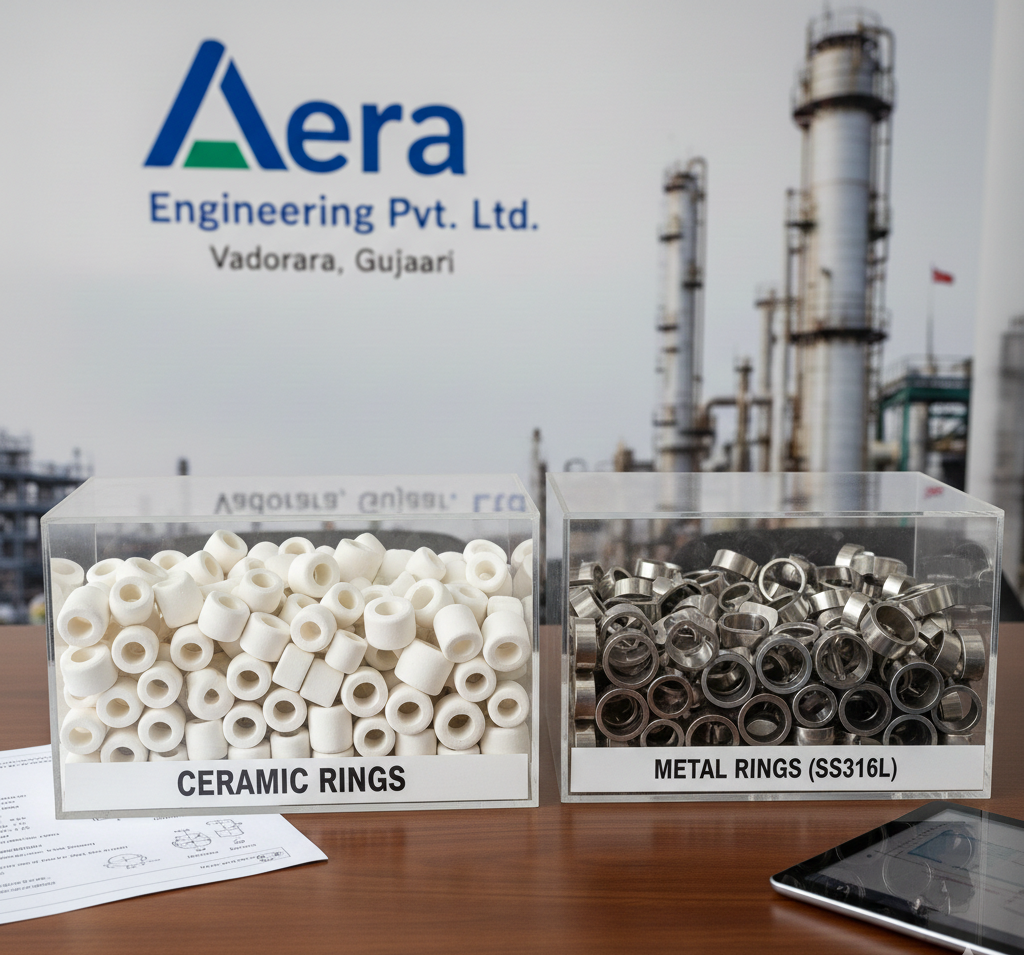
Ceramic vs Metal Raschig rings for chemical plants
2026-01-17T05:28:30
When designing a distillation or absorption tower, the choice of random packing material can be the difference between a high-efficiency plant and a maintenance nightmare. While the cylindrical shape of the Raschig ring is a century-old classic, the material—Ceramic vs. Metal—dictates how your system will handle heat, chemicals, and mechanical stress. At Aera Engineering Pvt Ltd, we provide both solutions to the industrial hub of Vadodara. Here is a technical breakdown to help you decide which material fits your chemical process. ________________________________________ Ceramic Raschig Rings: The Corrosion Specialists Ceramic rings are the traditional choice for environments where metals simply cannot survive. They are manufactured from high-quality alumina or porcelain, making them nearly inert. Best For: • Strong Acids & Alkalis: Ideally suited for sulfuric acid plants, hydrochloric acid scrubbers, and caustic systems. • Extreme Temperatures: Can withstand operating temperatures up to 1200°C, far exceeding the limits of most metals. • Contamination-Sensitive Processes: Being non-reactive, they won't leach metal ions into your product. The Trade-off: • Brittleness: Ceramic is prone to 'crushing' or breaking if the tower is packed too aggressively or undergoes extreme mechanical vibration. • Weight: They are significantly heavier than metal, which may require more robust internal support grids. Metal Raschig Rings: The High-Strength Workhorses Typically fabricated from Stainless Steel (304, 316L), Carbon Steel, or even Copper, metal rings are chosen for their structural integrity and superior flow dynamics. Best For: • High Mechanical Loads: In tall columns with massive packing heights, metal rings won't crush under their own weight. • Thermal Shock Resistance: Unlike ceramic, metal can handle rapid heating and cooling cycles without cracking. • Finer Wall Thickness: Metal rings have thinner walls than ceramic. This increases the void fraction (empty space), leading to a lower pressure drop and higher gas capacity. The Trade-off: • Corrosion Limits: Even SS316L has limits. In highly oxidizing or chloride-rich environments, metal will eventually pit or corrode. • Price Volatility: The cost of metal packing is tied directly to global steel and alloy market prices. Which Should You Choose? Choose Ceramic if your process involves aggressive inorganic acids (like H2SO4 or HCl) or operates at temperatures that would soften or melt stainless steel. It is the gold standard for acid-drying towers and chlor-alkali plants. Choose Metal if you need to maximize throughput (lower pressure drop) and your chemical environment is neutral or only mildly corrosive. It is the preferred choice for vacuum distillation and oil refining, where mechanical reliability is paramount. At Aera Engineering Pvt Ltd, we don't just sell packing; we help you engineer your process. Based in Vadodara, we understand the unique demands of Gujarat's chemical corridor. Would you like me to calculate the estimated pressure drop for a specific size of Ceramic vs. Metal rings for your tower?
2026-01-17T05:28:30


Submit Your Enquiry