
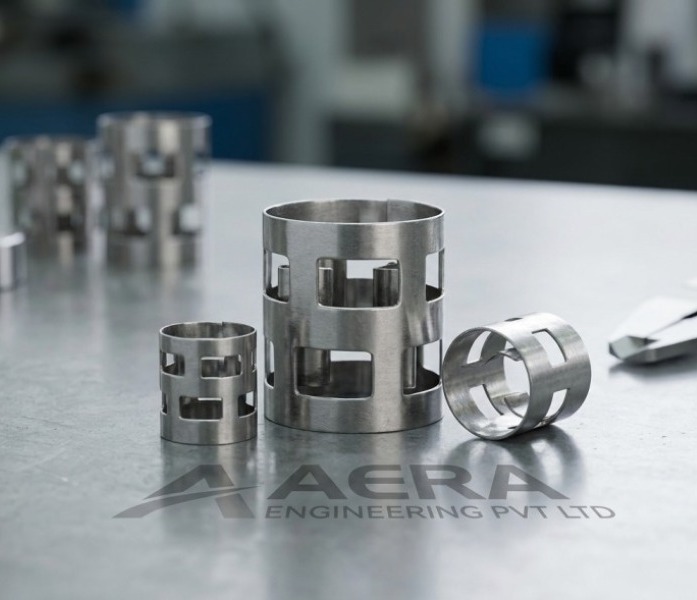
Here is an industry-focused, SEO-optimized B2B blog post tailored for Aera Engineering Pvt. Ltd. to help process engineers and plant operators across Taiwan identify and resolve critical mass transfer bottlenecks. Overcoming Column Bottlenecks: Common Tower Packing Problems in Taiwan Plants and Their Solutions In Taiwan’s high-precision industrial sectors—ranging from the ultra-pure electronics-grade chemical lines in Hsinchu and Tainan to the massive petrochemical refining complexes in Kaohsiung and Mailiao—mass transfer columns are the heart of daily production. Whether your facility runs high-vacuum distillation towers, amine scrubbers, or solvent recovery units, any drop in column efficiency directly impacts your product purity and inflates your energy bills. Despite advanced automation, process engineers frequently encounter recurring thermodynamic and mechanical bottlenecks inside packed beds. If left unchecked, these issues can lead to off-spec products or, worse, unscheduled plant shutdowns that cost millions in lost operational revenue. As a globally trusted manufacturer and exporter of metallic random packing based in Vadodara, Gujarat (India), Aera Engineering Pvt. Ltd. has analyzed decades of column performance data. Below, we look at the most common tower packing problems faced by Taiwanese processing plants and the engineering solutions to resolve them. Problem 1: Liquid Channeling and 'Bypassing' The Symptom: A sudden, inexplicable drop in mass transfer and separation efficiency, often accompanied by an inability to meet strict product purity targets (such as electronic-grade chemical specifications), even though vapor and liquid flow rates appear stable. The Root Cause: Liquid channeling occurs when the descending liquid scrubbing agent or reflux migrates outward, flowing primarily down the smooth internal walls of the column rather than trickling uniformly through the center of the packed bed. When gas and liquid bypass each other entirely, the effective interfacial area drops drastically. This is frequently caused by using old-generation cylindrical packings that are prone to uniform stacking or improper initial liquid distribution. The Engineered Solution: Upgrade to Anti-Nesting Geometries: Replace standard cylindrical media with geometries designed to completely eliminate interlocking, such as Metallic Intalox Saddles or IMTP Saddles. The Fluid Dynamics Edge: The unique semi-circular arc profile of a saddle ensures a 100% completely randomized distribution when dumped into a column. Its scalloped edges and internal ribs continuously shear the liquid streams, forcing them away from the column walls and back into a highly turbulent dynamic thin film across the entire cross-section of the bed. Problem 2: High Pressure Drops and Premature Column Flooding The Symptom: The tower experiences a rapid spike in differential pressure (dP). Blower, compressor, or reboiler power consumption skyrockets, and the column quickly hits its hydrodynamic flooding limit, forcing operators to cut back daily production throughput. The Root Cause: High pressure drops occur when rising vapors encounter extreme physical resistance inside the packed bed. This happens when traditional packings possess thick walls that restrict space, or when low-rigidity media deforms under heavy loads, severely reducing the column's open void fraction. The Engineered Solution: Switch to Thin-Wall, High-Voidage Packings: Upgrade your internals to Metallic Pall Rings or low-aspect-ratio Cascade Mini-Rings (CMR) fabricated with precision thin-wall engineering (typically 0.3 mm to 0.6 mm). The Fluid Dynamics Edge: Precision-engineered metallic random packings open up the column interior, delivering an exceptionally high volumetric void fraction (up to 98%). Cascade Mini-Rings naturally orient themselves horizontally when dumped. This means rising vapors hit the wide, open, perforated faces of the rings rather than a solid wall, minimizing aerodynamic drag and allowing you to safely increase vapor velocities without triggering a flood. Problem 3: Mechanical Bed Crushing and Thermal Creep The Symptom: During a scheduled plant turnaround or inspection, operators find that the bottom layers of the random packing bed have flattened, compressed, or collapsed into a dense, solid mass of metal, completely choking off vapor flow. The Root Cause: Petrochemical and refining columns feature deep packing heights (frequently exceeding 10 to 15 meters) and run under intense thermal cycles. Over time, the massive compressive weight of the upper bed combined with high operating temperatures causes thermal creep—the slow structural deformation of metal under constant stress. Lower-grade alloys or poorly ribbed packings simply buckle under these conditions. The Engineered Solution: Deploy Mechanically Ribbed Geometries & Proper Support Elements: Use packings with heavy structural ribbing, like Cascade Mini-Rings or reinforced Pall Rings, which offer superior mechanical crushing strength. Specify High-Creep Refined Metallurgy: Move away from standard steels and insist on Stainless Steel 316 / 316L (SS316/316L) for high-temperature zones. The inclusion of 2% to 3% Molybdenum in SS316 significantly enhances the alloy's structural yield point and creep resistance under elevated thermal loads, preventing structural bed collapse. Problem 4: Localized Pitting and Stress Corrosion Cracking The Symptom: Premature structural failure of the tower packing, characterized by localized pinholes, brittleness, or pieces of rusted packing breaking off and fouling downstream pumps and reboiler tubes. The Root Cause: Refinery columns, sour water strippers, and marine-adjacent absorption towers regularly process aggressive chemical fractions, trace salts, and concentrated sour gases ($H_2S$ and $CO_2$). If an under-engineered alloy like standard carbon steel or basic SS304 is exposed to these aggressive halides and acids, it suffers rapid localized pitting and chloride stress corrosion cracking. The Engineered Solution: Mandatory Metallurgical Upgrading: For severe-service refinery and acid-gas applications, specify certified, mill-traceable SS316 or SS316L tower packing. Molybdenum fundamentally reconfigures the material's surface chemistry, providing a robust passive layer that blocks chloride-driven crevice attacks and localized pitting, vastly extending your mean time between replacements (MTBR). The Aera Engineering Advantage for Taiwanese Processing Units Operating from our advanced industrial engineering facility in Vadodara, Gujarat (India), Aera Engineering Pvt. Ltd. integrates high-fidelity fabrication with streamlined international trade compliance to support Taiwan's industrial networks: Automated Tooling Consistency: We form our random packings using advanced automated progressive stamping dies. This guarantees that every single ring, saddle, or mini-ring exhibits perfectly uniform wall thickness and flush, burr-free edges—ensuring completely predictable hydraulic curves. Total Metallurgical Traceability: We enforce strict zero-tolerance quality control checks. Every bulk export shipment we dispatch is backed by a comprehensive technical data package, including raw material mill test certificates and rigorous Positive Material Identification (PMI) testing to verify exact alloy grade authenticity. Reliable Logistics to Kaohsiung & Keelung Ports: We pack our random packings in heavy-duty, crush-resistant, seaworthy wooden crates to protect their structural integrity during maritime transit, offering predictable shipping schedules aligned precisely with your planned shutdown and turnaround windows. Troubleshoot Your Separation Towers with a Trusted Partner Whether you are modifying an underperforming gas scrubber to expand throughput, upgrading a vacuum distillation column, or stocking up on high-durability replacement internals for an upcoming scheduled turnaround, Aera Engineering supplies the premium-grade metallic random packing your facility demands. Get a Technical Consultation & Direct Factory Quote Connect directly with our global trade and engineering desk to calculate packing factors, evaluate specific volume density constraints, or request commercial export pricing: Contact Person: Tanish Bokadia (Director) Direct Email: tanish@aearepl.com Manufacturing Location: Vadodara, Gujarat, India Official Website: www.aeraepl.com Suggested URL Slug: common-tower-packing-problems-solutions-taiwan-plants Tower Packing Problems in Taiwan Plants & Solutions | Aera Engineering Troubleshoot liquid channeling, high pressure drops, and packing corrosion in Taiwan industrial columns. Discover high-efficiency SS304/SS316 solutions. Contact tanish@aearepl.com. Target Keywords: Tower packing problems Taiwan, Column flooding solutions, Metallic random packing manufacturer, Liquid channeling distillation, SS316 Pall Rings Mailiao, Aera Engineering Pvt Ltd.


This is your website preview.
Currently it only shows your basic business info. Start adding relevant business details such as description, images and products or services to gain your customers attention by using Boost 360 android app / iOS App / web portal.
Common Tower Packing Problems in Taiwan Plants and Their Solutions
2026-06-05T12:30:16
Here is an industry-focused, SEO-optimized B2B blog post tailored for Aera Engineering Pvt. Ltd. to help process engineers and plant operators across Taiwan identify and resolve critical mass transfer bottlenecks. Overcoming Column Bottlenecks: Common Tower Packing Problems in Taiwan Plants and Their Solutions In Taiwan’s high-precision industrial sectors—ranging from the ultra-pure electronics-grade chemical lines in Hsinchu and Tainan to the massive petrochemical refining complexes in Kaohsiung and Mailiao—mass transfer columns are the heart of daily production. Whether your facility runs high-vacuum distillation towers, amine scrubbers, or solvent recovery units, any drop in column efficiency directly impacts your product purity and inflates your energy bills. Despite advanced automation, process engineers frequently encounter recurring thermodynamic and mechanical bottlenecks inside packed beds. If left unchecked, these issues can lead to off-spec products or, worse, unscheduled plant shutdowns that cost millions in lost operational revenue. As a globally trusted manufacturer and exporter of metallic random packing based in Vadodara, Gujarat (India), Aera Engineering Pvt. Ltd. has analyzed decades of column performance data. Below, we look at the most common tower packing problems faced by Taiwanese processing plants and the engineering solutions to resolve them. Problem 1: Liquid Channeling and 'Bypassing' The Symptom: A sudden, inexplicable drop in mass transfer and separation efficiency, often accompanied by an inability to meet strict product purity targets (such as electronic-grade chemical specifications), even though vapor and liquid flow rates appear stable. The Root Cause: Liquid channeling occurs when the descending liquid scrubbing agent or reflux migrates outward, flowing primarily down the smooth internal walls of the column rather than trickling uniformly through the center of the packed bed. When gas and liquid bypass each other entirely, the effective interfacial area drops drastically. This is frequently caused by using old-generation cylindrical packings that are prone to uniform stacking or improper initial liquid distribution. The Engineered Solution: Upgrade to Anti-Nesting Geometries: Replace standard cylindrical media with geometries designed to completely eliminate interlocking, such as Metallic Intalox Saddles or IMTP Saddles. The Fluid Dynamics Edge: The unique semi-circular arc profile of a saddle ensures a 100% completely randomized distribution when dumped into a column. Its scalloped edges and internal ribs continuously shear the liquid streams, forcing them away from the column walls and back into a highly turbulent dynamic thin film across the entire cross-section of the bed. Problem 2: High Pressure Drops and Premature Column Flooding The Symptom: The tower experiences a rapid spike in differential pressure (dP). Blower, compressor, or reboiler power consumption skyrockets, and the column quickly hits its hydrodynamic flooding limit, forcing operators to cut back daily production throughput. The Root Cause: High pressure drops occur when rising vapors encounter extreme physical resistance inside the packed bed. This happens when traditional packings possess thick walls that restrict space, or when low-rigidity media deforms under heavy loads, severely reducing the column's open void fraction. The Engineered Solution: Switch to Thin-Wall, High-Voidage Packings: Upgrade your internals to Metallic Pall Rings or low-aspect-ratio Cascade Mini-Rings (CMR) fabricated with precision thin-wall engineering (typically 0.3 mm to 0.6 mm). The Fluid Dynamics Edge: Precision-engineered metallic random packings open up the column interior, delivering an exceptionally high volumetric void fraction (up to 98%). Cascade Mini-Rings naturally orient themselves horizontally when dumped. This means rising vapors hit the wide, open, perforated faces of the rings rather than a solid wall, minimizing aerodynamic drag and allowing you to safely increase vapor velocities without triggering a flood. Problem 3: Mechanical Bed Crushing and Thermal Creep The Symptom: During a scheduled plant turnaround or inspection, operators find that the bottom layers of the random packing bed have flattened, compressed, or collapsed into a dense, solid mass of metal, completely choking off vapor flow. The Root Cause: Petrochemical and refining columns feature deep packing heights (frequently exceeding 10 to 15 meters) and run under intense thermal cycles. Over time, the massive compressive weight of the upper bed combined with high operating temperatures causes thermal creep—the slow structural deformation of metal under constant stress. Lower-grade alloys or poorly ribbed packings simply buckle under these conditions. The Engineered Solution: Deploy Mechanically Ribbed Geometries & Proper Support Elements: Use packings with heavy structural ribbing, like Cascade Mini-Rings or reinforced Pall Rings, which offer superior mechanical crushing strength. Specify High-Creep Refined Metallurgy: Move away from standard steels and insist on Stainless Steel 316 / 316L (SS316/316L) for high-temperature zones. The inclusion of 2% to 3% Molybdenum in SS316 significantly enhances the alloy's structural yield point and creep resistance under elevated thermal loads, preventing structural bed collapse. Problem 4: Localized Pitting and Stress Corrosion Cracking The Symptom: Premature structural failure of the tower packing, characterized by localized pinholes, brittleness, or pieces of rusted packing breaking off and fouling downstream pumps and reboiler tubes. The Root Cause: Refinery columns, sour water strippers, and marine-adjacent absorption towers regularly process aggressive chemical fractions, trace salts, and concentrated sour gases ($H_2S$ and $CO_2$). If an under-engineered alloy like standard carbon steel or basic SS304 is exposed to these aggressive halides and acids, it suffers rapid localized pitting and chloride stress corrosion cracking. The Engineered Solution: Mandatory Metallurgical Upgrading: For severe-service refinery and acid-gas applications, specify certified, mill-traceable SS316 or SS316L tower packing. Molybdenum fundamentally reconfigures the material's surface chemistry, providing a robust passive layer that blocks chloride-driven crevice attacks and localized pitting, vastly extending your mean time between replacements (MTBR). The Aera Engineering Advantage for Taiwanese Processing Units Operating from our advanced industrial engineering facility in Vadodara, Gujarat (India), Aera Engineering Pvt. Ltd. integrates high-fidelity fabrication with streamlined international trade compliance to support Taiwan's industrial networks: Automated Tooling Consistency: We form our random packings using advanced automated progressive stamping dies. This guarantees that every single ring, saddle, or mini-ring exhibits perfectly uniform wall thickness and flush, burr-free edges—ensuring completely predictable hydraulic curves. Total Metallurgical Traceability: We enforce strict zero-tolerance quality control checks. Every bulk export shipment we dispatch is backed by a comprehensive technical data package, including raw material mill test certificates and rigorous Positive Material Identification (PMI) testing to verify exact alloy grade authenticity. Reliable Logistics to Kaohsiung & Keelung Ports: We pack our random packings in heavy-duty, crush-resistant, seaworthy wooden crates to protect their structural integrity during maritime transit, offering predictable shipping schedules aligned precisely with your planned shutdown and turnaround windows. Troubleshoot Your Separation Towers with a Trusted Partner Whether you are modifying an underperforming gas scrubber to expand throughput, upgrading a vacuum distillation column, or stocking up on high-durability replacement internals for an upcoming scheduled turnaround, Aera Engineering supplies the premium-grade metallic random packing your facility demands. Get a Technical Consultation & Direct Factory Quote Connect directly with our global trade and engineering desk to calculate packing factors, evaluate specific volume density constraints, or request commercial export pricing: Contact Person: Tanish Bokadia (Director) Direct Email: tanish@aearepl.com Manufacturing Location: Vadodara, Gujarat, India Official Website: www.aeraepl.com Suggested URL Slug: common-tower-packing-problems-solutions-taiwan-plants Tower Packing Problems in Taiwan Plants & Solutions | Aera Engineering Troubleshoot liquid channeling, high pressure drops, and packing corrosion in Taiwan industrial columns. Discover high-efficiency SS304/SS316 solutions. Contact tanish@aearepl.com. Target Keywords: Tower packing problems Taiwan, Column flooding solutions, Metallic random packing manufacturer, Liquid channeling distillation, SS316 Pall Rings Mailiao, Aera Engineering Pvt Ltd.
2026-06-05T12:30:16


Submit Your Enquiry