
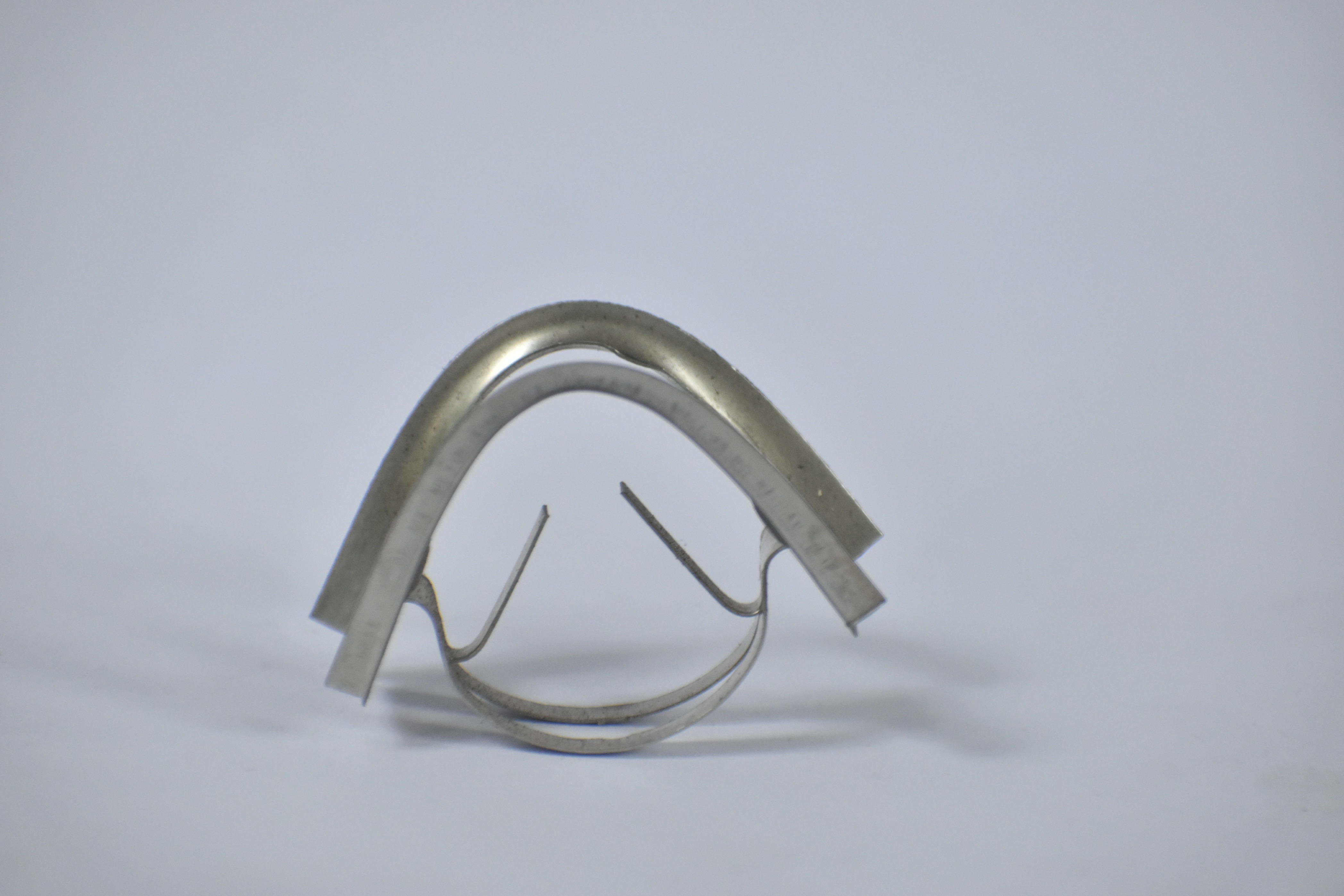
Bridging the Gap Between Standard Steel and Superalloys: Duplex vs. Stainless Steel Packing in Indian Industries When designing or upgrading industrial fractionators, sour gas strippers, or high-vacuum distillation towers, process engineers frequently hit a frustrating materials crossroads. On one side are standard austenitic stainless steels like SS 304 and SS 316L—reliable, budget-friendly industry workhorses that handle daily mass transfer routines but rapidly crack or pit under intense thermal loads and heavy chloride concentrations. On the other side sit elite nickel-based superalloys like Monel or Hastelloy, which offer impeccable chemical defense but require an enormous capital expenditure (CAPEX) that can easily strain a project’s baseline economics. For high-velocity processing columns subjected to harsh stress and aggressive chemicals, finding a mid-point is essential. This is where Duplex Stainless Steel enters the equation. Operating from our advanced industrial manufacturing facility in Vadodara, Gujarat, Aera Engineering Pvt. Ltd. fabricates high-capacity random tower packings across both material families. This comprehensive guide breaks down the structural, technical, and financial differences between Duplex and standard Stainless Steel tower packings to help your procurement team make an informed selection. 1. Crystalline Microstructure: Standard Steel vs. The Dual-Phase Matrix The fundamental difference between standard stainless steels and duplex alloys lies hidden within their atomic arrangements. This internal microstructure directly dictates how a random packing element behaves under compressive weight and chemical attack. Austenitic Stainless Steel (SS 304 / 316L) Standard industrial stainless steels belong to the austenitic family, characterized by a Face-Centered Cubic (FCC) crystalline structure. While this atomic layout gives elements like Aera P-Rings (Pall Rings) or classic Raschig rings superb ductility, ease of forming, and excellent general corrosion resistance, it leaves them structurally vulnerable to rapid mechanical creep and localized stress cracking under combined thermal and chemical loads. Duplex Stainless Steel (e.g., Duplex 2205) Duplex stainless steel is a highly engineered alloy that features a dual-phase microstructure, combining roughly 50% austenite and 50% ferrite in a balanced matrix. • The Structural Advantage: This dual-phase crystalline layout captures the premium ductility and corrosion resistance of austenitic steel alongside the high yield strength and stress immunity of ferritic steel. It acts as an incredibly robust metallurgical bridge, offering high structural capabilities without the extreme price tag of a nickel superalloy. Deep packed beds exert intense downward static weight on the random packing resting at the bottom of a column. Because Duplex 2205 possesses double the yield strength of SS 316L, it exhibits exceptional mechanical crushing strength. This prevents elements from flattening or deforming over long operational lifecycles under heavy liquid hold-ups, ensuring your bed maintains its high free volume. Pitting Resistance Equivalent Number (PREN) The PREN value is a mathematical formula (text{PREN} = text{Cr} + 3.3text{Mo} + 16text{N}) indicating a metal's resistance to localized perforation in halogenic environments. Thanks to elevated levels of chromium and molybdenum, Duplex tower packing scores significantly higher than standard stainless steels, making it remarkably resilient against severe crevice corrosion. Total Defense Against Stress Corrosion Cracking (SCC) The single greatest limitation of standard austenitic stainless steels is their vulnerability to chloride-ion stress corrosion cracking (SCC) when exposed to saline fluids or chlorinated water at temperatures exceeding 60°C. Duplex’s ferritic phase provides virtually complete immunity to SCC, making it an essential upgrade for punishing process lines. Our precision-stamped saddles combine an aerodynamic curve with internal projecting fingers to eliminate element interlocking or nesting. This advanced geometric configuration ensures individual pieces preferentially orient themselves within a column to provide 92% to 98% free volume. This design: • Eliminates Liquid Channeling: Fluids spread evenly across the core rather than bypassing and running exclusively along the tower shell walls. • Minimizes Pressure Drops: Upward vapor streams move smoothly with minimal resistance, significantly reducing daily blower and compressor energy bills. • Boosts Column Throughput: Upgrades existing column shells to handle up to 10–30% higher vapor capacity, allowing chemical plants to easily debottleneck their operations. 4. Financial Indicators: Upfront CAPEX vs. Total Cost of Ownership (TCO) Procurement managers frequently focus exclusively on the raw material cost per kilogram. While Duplex 2205 carries a higher per-ton raw material cost compared to standard SS 316L, analyzing the Total Cost of Ownership (TCO) reveals a compelling economic advantage: • Wall Thickness Optimization: Because Duplex possesses double the mechanical strength, Aera Engineering can stamp precision random packings and sheet metal pressed components (such as support grids and liquid distributors) with thinner walls without compromising structural crushing strength. This drastically reduces the total weight of the consignment, lowering shipping fees and structural tower foundation loads. • Reduced Nickel Price Volatility: Duplex contains significantly less nickel than standard austenitic steels, replacing it with nitrogen and manganese. This structural chemistry makes Duplex pricing far more stable against unpredictable global nickel market spikes, allowing procurement teams to lock in competitive bulk quotes. • Extended Operational Lifespan: An unoptimized material choice that saves money initially can quickly trigger a column failure. Investing in Duplex for aggressive, high-chloride chemical loops eliminates premature packing collapse, paying for itself by avoiding catastrophic, multi-million-rupee daily production losses from unplanned turnarounds. Typical Sourcing Alignments Across Indian Industries To streamline your procurement choices, our engineering desk maps out the standard application zones for both materials across the Indian industrial landscape: Deploy Standard Stainless Steel (SS 316L) When: • The process stream handles non-corrosive hydrocarbons, atmospheric organic acids, or general solvent recovery lines. • Operating temperatures remain moderate, and chloride concentrations are minimal. • The packed bed height is standard, posing a lower risk of mechanical element flattening. Upgrade to Duplex Stainless Steel (Duplex 2205) When: • The tower handles warm seawater cooling systems, high-salinity desalination stripping, offshore platform utilities, or regional brackish wash waters. • The chemical loops include moderate concentrations of aggressive reducing mineral acids, hydrogen sulfide (H_2S), or carbon dioxide (CO_2). • The tower features exceptionally deep packed beds where the packing resting at the bottom requires superior crushing resistance to avoid bed compaction. The Aera Engineering Manufacturing Advantage As an ISO 9001:2015 certified manufacturer based in Gujarat's core industrial manufacturing corridor, Aera Engineering Pvt. Ltd. eliminates supply chain friction for heavy industries nationwide. Sourcing your tower internals through our ecosystem provides distinct operational and economic advantages: • In-House Tooling Precision: Forming tough, high-strength alloys like Duplex requires robust stamping infrastructure. We cut, design, and maintain 100% of our progressive stamping dies entirely in-house, ensuring absolute dimensional uniformity across millions of individual high-alloy pieces to completely prevent element nesting. • 100% Certified Material Traceability: We mandate rigid Positive Material Identification (PMI) testing on 100% of incoming raw coils, backing every consignment with comprehensive Material Test Certificates (MTCs) and full heat-number traceability. • Factory-Direct Pricing Economics: Operating as a direct, end-to-end manufacturer, we eliminate multi-tier trading markups and distributor fees, passing structural cost savings directly onto your capital budget. Optimize Your Column Sourcing Pipeline Today Don't let rigid component catalogs, unverified material tracking, or middleman markups compromise your plant's capital efficiency and long-term asset integrity. Sourcing the perfect tower packing material requires balancing your fluid chemistry and temperature thresholds with factory-direct manufacturing economics. Connect with the technical sourcing desk at Aera Engineering Pvt. Ltd. today. Submit your column diameters, share your volume requirements (in cubic meters or cubic feet) or structural drawings with our sales engineers, and receive a comprehensive, precision-aligned factory-direct quotation. Keywords Regarding This Guide • Duplex vs Stainless Steel Packing India • Aera Engineering Pvt Ltd Vadodara • Duplex 2205 Random Packing Sourcing • Intalox Metal Tower Packing India • Sheet Metal Pressed Components Vadodara • Plastic and Metal Pall Ring Manufacturer India • High Alloy Column Packing Suppliers Gujarat • SS 316L Tower Packing Price India • Industrial Random Packing Sourcing Dahej


This is your website preview.
Currently it only shows your basic business info. Start adding relevant business details such as description, images and products or services to gain your customers attention by using Boost 360 android app / iOS App / web portal.
Duplex vs Stainless Steel Random Tower Packing India
2026-06-15T10:59:14
Bridging the Gap Between Standard Steel and Superalloys: Duplex vs. Stainless Steel Packing in Indian Industries When designing or upgrading industrial fractionators, sour gas strippers, or high-vacuum distillation towers, process engineers frequently hit a frustrating materials crossroads. On one side are standard austenitic stainless steels like SS 304 and SS 316L—reliable, budget-friendly industry workhorses that handle daily mass transfer routines but rapidly crack or pit under intense thermal loads and heavy chloride concentrations. On the other side sit elite nickel-based superalloys like Monel or Hastelloy, which offer impeccable chemical defense but require an enormous capital expenditure (CAPEX) that can easily strain a project’s baseline economics. For high-velocity processing columns subjected to harsh stress and aggressive chemicals, finding a mid-point is essential. This is where Duplex Stainless Steel enters the equation. Operating from our advanced industrial manufacturing facility in Vadodara, Gujarat, Aera Engineering Pvt. Ltd. fabricates high-capacity random tower packings across both material families. This comprehensive guide breaks down the structural, technical, and financial differences between Duplex and standard Stainless Steel tower packings to help your procurement team make an informed selection. 1. Crystalline Microstructure: Standard Steel vs. The Dual-Phase Matrix The fundamental difference between standard stainless steels and duplex alloys lies hidden within their atomic arrangements. This internal microstructure directly dictates how a random packing element behaves under compressive weight and chemical attack. Austenitic Stainless Steel (SS 304 / 316L) Standard industrial stainless steels belong to the austenitic family, characterized by a Face-Centered Cubic (FCC) crystalline structure. While this atomic layout gives elements like Aera P-Rings (Pall Rings) or classic Raschig rings superb ductility, ease of forming, and excellent general corrosion resistance, it leaves them structurally vulnerable to rapid mechanical creep and localized stress cracking under combined thermal and chemical loads. Duplex Stainless Steel (e.g., Duplex 2205) Duplex stainless steel is a highly engineered alloy that features a dual-phase microstructure, combining roughly 50% austenite and 50% ferrite in a balanced matrix. • The Structural Advantage: This dual-phase crystalline layout captures the premium ductility and corrosion resistance of austenitic steel alongside the high yield strength and stress immunity of ferritic steel. It acts as an incredibly robust metallurgical bridge, offering high structural capabilities without the extreme price tag of a nickel superalloy. Deep packed beds exert intense downward static weight on the random packing resting at the bottom of a column. Because Duplex 2205 possesses double the yield strength of SS 316L, it exhibits exceptional mechanical crushing strength. This prevents elements from flattening or deforming over long operational lifecycles under heavy liquid hold-ups, ensuring your bed maintains its high free volume. Pitting Resistance Equivalent Number (PREN) The PREN value is a mathematical formula (text{PREN} = text{Cr} + 3.3text{Mo} + 16text{N}) indicating a metal's resistance to localized perforation in halogenic environments. Thanks to elevated levels of chromium and molybdenum, Duplex tower packing scores significantly higher than standard stainless steels, making it remarkably resilient against severe crevice corrosion. Total Defense Against Stress Corrosion Cracking (SCC) The single greatest limitation of standard austenitic stainless steels is their vulnerability to chloride-ion stress corrosion cracking (SCC) when exposed to saline fluids or chlorinated water at temperatures exceeding 60°C. Duplex’s ferritic phase provides virtually complete immunity to SCC, making it an essential upgrade for punishing process lines. Our precision-stamped saddles combine an aerodynamic curve with internal projecting fingers to eliminate element interlocking or nesting. This advanced geometric configuration ensures individual pieces preferentially orient themselves within a column to provide 92% to 98% free volume. This design: • Eliminates Liquid Channeling: Fluids spread evenly across the core rather than bypassing and running exclusively along the tower shell walls. • Minimizes Pressure Drops: Upward vapor streams move smoothly with minimal resistance, significantly reducing daily blower and compressor energy bills. • Boosts Column Throughput: Upgrades existing column shells to handle up to 10–30% higher vapor capacity, allowing chemical plants to easily debottleneck their operations. 4. Financial Indicators: Upfront CAPEX vs. Total Cost of Ownership (TCO) Procurement managers frequently focus exclusively on the raw material cost per kilogram. While Duplex 2205 carries a higher per-ton raw material cost compared to standard SS 316L, analyzing the Total Cost of Ownership (TCO) reveals a compelling economic advantage: • Wall Thickness Optimization: Because Duplex possesses double the mechanical strength, Aera Engineering can stamp precision random packings and sheet metal pressed components (such as support grids and liquid distributors) with thinner walls without compromising structural crushing strength. This drastically reduces the total weight of the consignment, lowering shipping fees and structural tower foundation loads. • Reduced Nickel Price Volatility: Duplex contains significantly less nickel than standard austenitic steels, replacing it with nitrogen and manganese. This structural chemistry makes Duplex pricing far more stable against unpredictable global nickel market spikes, allowing procurement teams to lock in competitive bulk quotes. • Extended Operational Lifespan: An unoptimized material choice that saves money initially can quickly trigger a column failure. Investing in Duplex for aggressive, high-chloride chemical loops eliminates premature packing collapse, paying for itself by avoiding catastrophic, multi-million-rupee daily production losses from unplanned turnarounds. Typical Sourcing Alignments Across Indian Industries To streamline your procurement choices, our engineering desk maps out the standard application zones for both materials across the Indian industrial landscape: Deploy Standard Stainless Steel (SS 316L) When: • The process stream handles non-corrosive hydrocarbons, atmospheric organic acids, or general solvent recovery lines. • Operating temperatures remain moderate, and chloride concentrations are minimal. • The packed bed height is standard, posing a lower risk of mechanical element flattening. Upgrade to Duplex Stainless Steel (Duplex 2205) When: • The tower handles warm seawater cooling systems, high-salinity desalination stripping, offshore platform utilities, or regional brackish wash waters. • The chemical loops include moderate concentrations of aggressive reducing mineral acids, hydrogen sulfide (H_2S), or carbon dioxide (CO_2). • The tower features exceptionally deep packed beds where the packing resting at the bottom requires superior crushing resistance to avoid bed compaction. The Aera Engineering Manufacturing Advantage As an ISO 9001:2015 certified manufacturer based in Gujarat's core industrial manufacturing corridor, Aera Engineering Pvt. Ltd. eliminates supply chain friction for heavy industries nationwide. Sourcing your tower internals through our ecosystem provides distinct operational and economic advantages: • In-House Tooling Precision: Forming tough, high-strength alloys like Duplex requires robust stamping infrastructure. We cut, design, and maintain 100% of our progressive stamping dies entirely in-house, ensuring absolute dimensional uniformity across millions of individual high-alloy pieces to completely prevent element nesting. • 100% Certified Material Traceability: We mandate rigid Positive Material Identification (PMI) testing on 100% of incoming raw coils, backing every consignment with comprehensive Material Test Certificates (MTCs) and full heat-number traceability. • Factory-Direct Pricing Economics: Operating as a direct, end-to-end manufacturer, we eliminate multi-tier trading markups and distributor fees, passing structural cost savings directly onto your capital budget. Optimize Your Column Sourcing Pipeline Today Don't let rigid component catalogs, unverified material tracking, or middleman markups compromise your plant's capital efficiency and long-term asset integrity. Sourcing the perfect tower packing material requires balancing your fluid chemistry and temperature thresholds with factory-direct manufacturing economics. Connect with the technical sourcing desk at Aera Engineering Pvt. Ltd. today. Submit your column diameters, share your volume requirements (in cubic meters or cubic feet) or structural drawings with our sales engineers, and receive a comprehensive, precision-aligned factory-direct quotation. Keywords Regarding This Guide • Duplex vs Stainless Steel Packing India • Aera Engineering Pvt Ltd Vadodara • Duplex 2205 Random Packing Sourcing • Intalox Metal Tower Packing India • Sheet Metal Pressed Components Vadodara • Plastic and Metal Pall Ring Manufacturer India • High Alloy Column Packing Suppliers Gujarat • SS 316L Tower Packing Price India • Industrial Random Packing Sourcing Dahej
2026-06-15T10:59:14


Submit Your Enquiry