
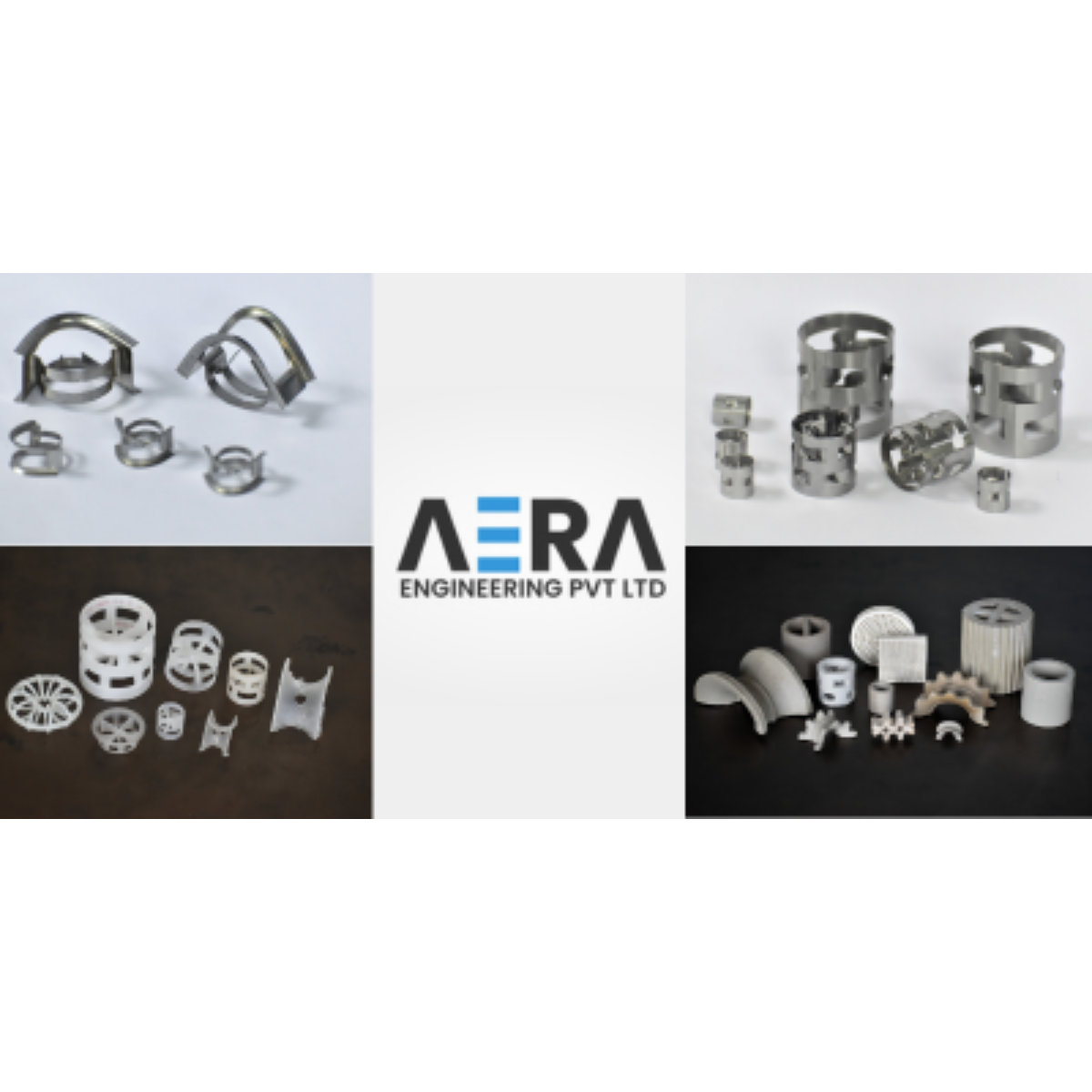
In the world of engineering, some of the most powerful innovations never get the spotlight. They're not flashy. They're not high-tech. But they work. And they work brilliantly. Random tower packing is one such hero — quietly boosting the performance of distillation and absorption columns across thousands of industrial plants. From refineries in Jamnagar to pharma units in Baddi, this tiny component shapes big outcomes. If you’ve ever wondered what keeps packed columns efficient, low on pressure drop, and easy to maintain — this blog is for you. What Is Random Tower Packing, Really? Let’s break it down. Inside packed columns — used for processes like distillation, scrubbing, and stripping — fluids (usually a gas and a liquid) need to make contact. But not just any contact — controlled, maximized, efficient interaction. That’s where random packing comes in. These are small, engineered shapes made from metal, ceramic, or plastic — dropped randomly into a column. They provide surface area and space for gas and liquid to interact, ensuring the mass transfer process happens efficiently. In short: they are the backbone of performance in mass transfer operations. The Evolution: From Raschig Rings to High-Performance Packings The journey began over a century ago with the humble Raschig ring — a simple cylinder that did the job. But as industries scaled and demands rose, engineers got creative. Here’s a quick evolution: Raschig Rings → Basic, low-efficiency design Pall Rings → Slotted for better liquid distribution Saddles (Berl, Intalox, Aera Saddles) → Unique shape for low pressure drop Cascade Mini Rings → Advanced geometry, higher capacity Each version is a leap forward — improving surface area, minimizing pressure drop, and enhancing throughput. Why Random Packing Still Matters in 2025 You might think in today’s AI-driven, data-centric world, something as old-school as metal rings wouldn’t be relevant. But the opposite is true. Random tower packing is more in demand than ever. Why? Plant operators want more throughput from the same equipment. Energy costs are rising — low pressure drop is gold. Maintenance windows are shorter — easy dumping and removal helps. In other words, random packing solves real, current problems — quietly, but effectively. Not All Packing Is Equal: What to Look For When engineers evaluate packing, they’re balancing five key factors: Surface Area – More area means more contact = better efficiency Void Space – Ensures flow without flooding Material Quality – SS 304, SS 316, Hastelloy or PTFE, depending on fluid Shape Geometry – Impacts pressure drop and distribution Manufacturing Precision – A poorly pressed ring can ruin flow patterns That’s why sourcing from a trusted, technically sound manufacturer matters. Real-Life Impact: A Quick Snapshot At a recent project for a major public sector refinery in India, a packing supplier delivered 120 m³ of Aera Saddles in just 7 weeks — with zero compromise on quality. The result? Efficient tower start-up No hold-up due to packing shortage Long-term trust built between vendor and client In mass transfer, these 'small' things add up to huge savings in time, cost, and performance. Where It’s Used — And Why It Works Common Applications: Crude oil fractionation Solvent recovery in pharma Acid gas scrubbers in chemical plants Air pollution control towers Water degassing and stripping Industries Benefiting: Petrochemical Fertilizer Textile & Dye Fine Chemicals Distilleries & Breweries Final Thoughts: A Big Future for Small Parts Random tower packing might look small, but it’s mission-critical. It’s not just about rings and saddles — it’s about unlocking process potential inside every packed column. So the next time you think about process efficiency, don’t forget what’s inside the tower. It could be the difference between average and optimized.


This is your website preview.
Currently it only shows your basic business info. Start adding relevant business details such as description, images and products or services to gain your customers attention by using Boost 360 android app / iOS App / web portal.
Introduction: The Hidden Hero Inside Every Tower
2025-07-22T04:01:08
In the world of engineering, some of the most powerful innovations never get the spotlight. They're not flashy. They're not high-tech. But they work. And they work brilliantly. Random tower packing is one such hero — quietly boosting the performance of distillation and absorption columns across thousands of industrial plants. From refineries in Jamnagar to pharma units in Baddi, this tiny component shapes big outcomes. If you’ve ever wondered what keeps packed columns efficient, low on pressure drop, and easy to maintain — this blog is for you. What Is Random Tower Packing, Really? Let’s break it down. Inside packed columns — used for processes like distillation, scrubbing, and stripping — fluids (usually a gas and a liquid) need to make contact. But not just any contact — controlled, maximized, efficient interaction. That’s where random packing comes in. These are small, engineered shapes made from metal, ceramic, or plastic — dropped randomly into a column. They provide surface area and space for gas and liquid to interact, ensuring the mass transfer process happens efficiently. In short: they are the backbone of performance in mass transfer operations. The Evolution: From Raschig Rings to High-Performance Packings The journey began over a century ago with the humble Raschig ring — a simple cylinder that did the job. But as industries scaled and demands rose, engineers got creative. Here’s a quick evolution: Raschig Rings → Basic, low-efficiency design Pall Rings → Slotted for better liquid distribution Saddles (Berl, Intalox, Aera Saddles) → Unique shape for low pressure drop Cascade Mini Rings → Advanced geometry, higher capacity Each version is a leap forward — improving surface area, minimizing pressure drop, and enhancing throughput. Why Random Packing Still Matters in 2025 You might think in today’s AI-driven, data-centric world, something as old-school as metal rings wouldn’t be relevant. But the opposite is true. Random tower packing is more in demand than ever. Why? Plant operators want more throughput from the same equipment. Energy costs are rising — low pressure drop is gold. Maintenance windows are shorter — easy dumping and removal helps. In other words, random packing solves real, current problems — quietly, but effectively. Not All Packing Is Equal: What to Look For When engineers evaluate packing, they’re balancing five key factors: Surface Area – More area means more contact = better efficiency Void Space – Ensures flow without flooding Material Quality – SS 304, SS 316, Hastelloy or PTFE, depending on fluid Shape Geometry – Impacts pressure drop and distribution Manufacturing Precision – A poorly pressed ring can ruin flow patterns That’s why sourcing from a trusted, technically sound manufacturer matters. Real-Life Impact: A Quick Snapshot At a recent project for a major public sector refinery in India, a packing supplier delivered 120 m³ of Aera Saddles in just 7 weeks — with zero compromise on quality. The result? Efficient tower start-up No hold-up due to packing shortage Long-term trust built between vendor and client In mass transfer, these 'small' things add up to huge savings in time, cost, and performance. Where It’s Used — And Why It Works Common Applications: Crude oil fractionation Solvent recovery in pharma Acid gas scrubbers in chemical plants Air pollution control towers Water degassing and stripping Industries Benefiting: Petrochemical Fertilizer Textile & Dye Fine Chemicals Distilleries & Breweries Final Thoughts: A Big Future for Small Parts Random tower packing might look small, but it’s mission-critical. It’s not just about rings and saddles — it’s about unlocking process potential inside every packed column. So the next time you think about process efficiency, don’t forget what’s inside the tower. It could be the difference between average and optimized.
2025-07-22T04:01:08


Submit Your Enquiry