
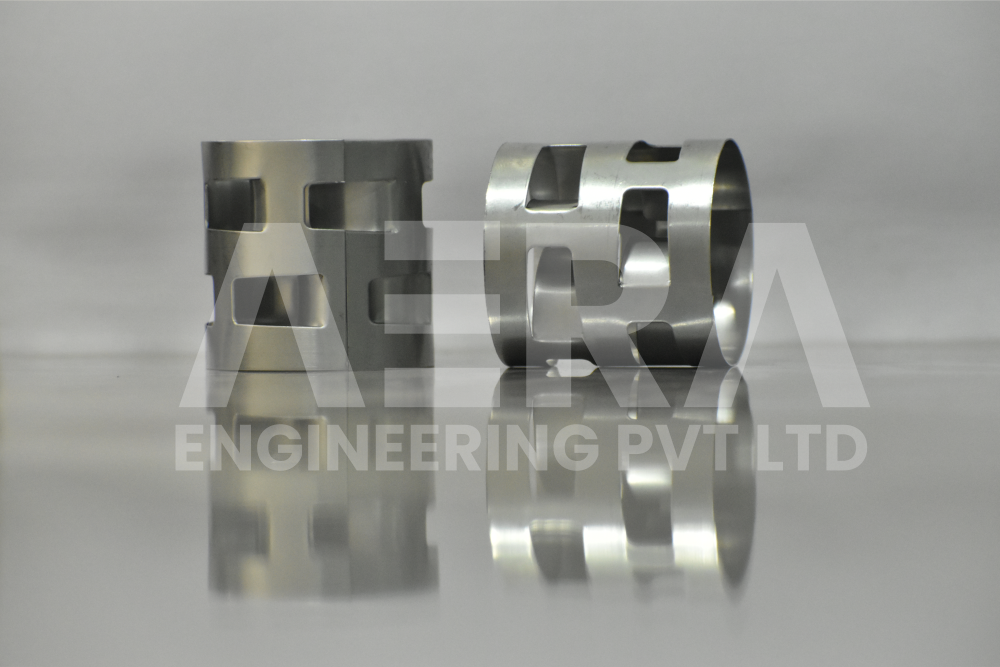
Metallic and ceramic Pall rings are both used to enhance mass transfer in various industrial processes, but they have distinct characteristics that make them suitable for different applications. Here are the key differences in their uses: **Metallic Pall Rings:** 1. **Material Composition:** Made from metals such as stainless steel, carbon steel, Monel, Hastelloy, copper or other alloys. 2. **Thermal Conductivity:** High thermal conductivity, making them ideal for processes requiring efficient heat transfer. 3. **Durability:** Highly durable and resistant to mechanical stress, suitable for high-pressure operations. 4. **Corrosion Resistance:** Excellent resistance to corrosive environments when made from appropriate alloys. 5. **Applications:** Commonly used in petrochemical, chemical processing, and gas absorption applications where high mechanical strength and thermal conductivity are critical. 6. **Operating Conditions:** Suitable for high-temperature and high-pressure conditions. ### **Ceramic Pall Rings:** 1. **Material Composition:** Made from ceramic materials such as alumina, silica, or other refractory compounds. 2. **Thermal Stability:** High thermal stability, making them ideal for high-temperature applications. 3. **Chemical Resistance:** Superior resistance to chemical corrosion, especially in acidic and alkaline environments. 4. **Weight:** Lighter than metallic rings, which can be advantageous in certain applications. 5. **Applications:** Often used in environmental applications such as waste gas treatment, flue gas desulfurization, and applications involving aggressive chemicals. 6. **Operating Conditions:** Best suited for applications requiring high resistance to thermal shock and chemical attack. ### **Summary:** - **Metallic Pall Rings** are preferred for applications requiring high mechanical strength, thermal conductivity, and resistance to corrosion under high pressure and temperature conditions. - **Ceramic Pall Rings** are chosen for their exceptional chemical resistance, thermal stability, and suitability for high-temperature and chemically aggressive environments. Selecting between metallic and ceramic Pall rings depends on the specific operational requirements, including the nature of the fluids involved, operating temperatures, pressures, and the presence of corrosive substances.


This is your website preview.
Currently it only shows your basic business info. Start adding relevant business details such as description, images and products or services to gain your customers attention by using Boost 360 android app / iOS App / web portal.
Metallic and ceramic Pall rings are both used to e...
2024-06-14T04:23:39
Metallic and ceramic Pall rings are both used to enhance mass transfer in various industrial processes, but they have distinct characteristics that make them suitable for different applications. Here are the key differences in their uses: **Metallic Pall Rings:** 1. **Material Composition:** Made from metals such as stainless steel, carbon steel, Monel, Hastelloy, copper or other alloys. 2. **Thermal Conductivity:** High thermal conductivity, making them ideal for processes requiring efficient heat transfer. 3. **Durability:** Highly durable and resistant to mechanical stress, suitable for high-pressure operations. 4. **Corrosion Resistance:** Excellent resistance to corrosive environments when made from appropriate alloys. 5. **Applications:** Commonly used in petrochemical, chemical processing, and gas absorption applications where high mechanical strength and thermal conductivity are critical. 6. **Operating Conditions:** Suitable for high-temperature and high-pressure conditions. ### **Ceramic Pall Rings:** 1. **Material Composition:** Made from ceramic materials such as alumina, silica, or other refractory compounds. 2. **Thermal Stability:** High thermal stability, making them ideal for high-temperature applications. 3. **Chemical Resistance:** Superior resistance to chemical corrosion, especially in acidic and alkaline environments. 4. **Weight:** Lighter than metallic rings, which can be advantageous in certain applications. 5. **Applications:** Often used in environmental applications such as waste gas treatment, flue gas desulfurization, and applications involving aggressive chemicals. 6. **Operating Conditions:** Best suited for applications requiring high resistance to thermal shock and chemical attack. ### **Summary:** - **Metallic Pall Rings** are preferred for applications requiring high mechanical strength, thermal conductivity, and resistance to corrosion under high pressure and temperature conditions. - **Ceramic Pall Rings** are chosen for their exceptional chemical resistance, thermal stability, and suitability for high-temperature and chemically aggressive environments. Selecting between metallic and ceramic Pall rings depends on the specific operational requirements, including the nature of the fluids involved, operating temperatures, pressures, and the presence of corrosive substances.
2024-06-14T04:23:39


Keywords
- 2.
- uses
- Monel
- metals
- copper
- acidic
- Weight
- silica
- nature
- fluids
- alumina
- Summary
- presence
- pressures
- Hastelloy
- suitability
- carbon steel
- other alloys
- thermal shock
- high pressure
- petrochemical
- mass transfer
- metallic rings
- chemical attack
- high resistance
- key differences
- stainless steel
- mechanical stress
- ceramic materials
- appropriate alloys
- chemical corrosion
- ceramic Pall rings
- Superior resistance
- waste gas treatment
- Metallic Pall Rings
- chemical processing
- aggressive chemicals
- corrosive substances
- Excellent resistance
- Corrosion Resistance
- Material Composition
- alkaline environments
- High thermal stability
- corrosive environments
- temperature conditions
- different applications
- operating temperatures
- efficient heat transfer
- aggressive environments
- flue gas desulfurization
- high mechanical strength
- distinct characteristics
- high-pressure conditions
- high-pressure operations
- High thermal conductivity
- environmental applications
- other refractory compounds
- gas absorption applications
- various industrial processes
- high-temperature applications
- exceptional chemical resistance
- specific operational requirements
Submit Your Enquiry