
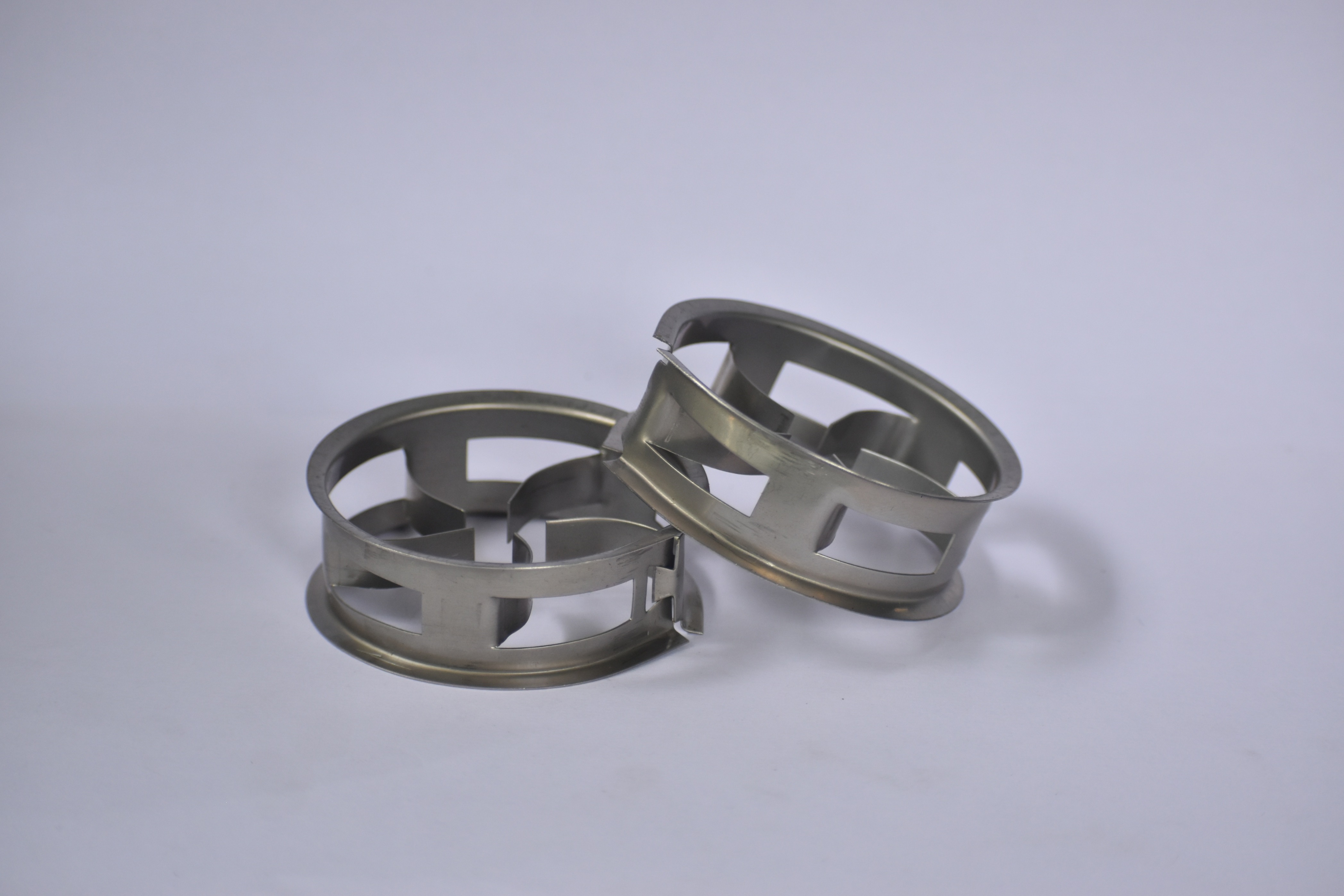
Process Optimization Matrix: SS 304 IMTP Saddle vs. Traditional Intalox Saddle for Vietnam’s Modern Processing Plants Inside the high-capacity separation columns, environmental air scrubbers, and chemical fractionation units operating across Vietnam's expanding industrial landscape, maximizing mass transfer efficiency is a continuous engineering priority. Whether managing petrochemical operations in the Nghi Son economic zone or running precise solvent reclamation loops in the industrial clusters of Binh Duong and Bac Ninh, process engineers face a critical decision when designing or retrofitting tower internals: Which random packing geometry yields the highest performance at the lowest operating cost? While evaluating tower hardware, two primary metallic options frequently emerge: third-generation IMTP (Intalox Metal Tower Packing) Saddles and classic, traditional Intalox Saddles. To provide clear guidance for procurement teams and process engineers across Vietnam, Aera Engineering Pvt Ltd has compiled this comprehensive technical breakdown comparing SS 304 IMTP Saddles against standard Intalox Saddles across key fluid-dynamic and financial metrics. 1. Geometric Evolution: Form Follows Function To understand the operational differences between these two packing types, one must examine their underlying physical designs. Traditional Metal Intalox Saddles The classic metal Intalox saddle utilizes a continuous, smooth, open-backed saddle-type arc. It was engineered to combine the benefits of a ring shape with the aerodynamics of a saddle profile. While it represented a major historical upgrade over older options like basic Raschig rings, its solid walls provide a continuous, unbroken surface barrier that gas and liquid streams must travel around. Advanced IMTP Saddles Third-generation IMTP random packing takes the fundamental saddle profile and radically alters its surface topology. Rather than a solid sheet of metal, IMTP elements feature strategically stamped windows, curved internal fingers, and flanged structural edges. This design fundamentally transforms how fluids interact within the column bed. 2. Direct Fluid-Dynamic Head-to-Head Comparison The geometric differences between these two styles translate directly into shifting column capacities, pressure drops, and overall separation efficiency. Mass Transfer and Phase Boundary Renewal Intalox Saddles: Descending liquids form a predictable film across the continuous solid metal surface. While stable, the layer requires a longer vertical bed height to achieve a full equilibrium stage. IMTP Saddles: As process fluids trickle through an IMTP bed, the stamped slots and curved inner fingers act as continuous, mechanical fluid-disruptors. They slice, shear, and redistribute the descending stream into ultra-thin, highly turbulent sheets. This forces a persistent renewal of the gas-liquid phase boundary, maximizing mass transfer rates and yielding a lower HETP (Height Equivalent to a Theoretical Plate). Bed Nesting and Channeling Risks Intalox Saddles: Because traditional saddles feature continuous, open-backed curves, they are highly prone to 'nesting'—mechanically sliding or stacking inside one another under heavy deep-bed weights. Nesting creates dense physical blockages that choke rising vapors and trigger severe liquid channeling (where liquid streams migrate toward the column wall rather than migrating uniformly through the packing). IMTP Saddles: The flanged edges, openings, and specialized structural curves of an IMTP saddle completely eliminate the risk of nesting. Elements establish a highly uniform, perfectly randomized void matrix across the entire bed depth, ensuring completely predictable hydraulic performance over decades of continuous operation. Pressure Drop and Throughput Capacities Intalox Saddles: The continuous metal faces present a higher physical resistance to rising vapor velocities, leading to a higher column pressure drop. IMTP Saddles: Boasting a massive free-volume ratio (typically between 96% and 98%), IMTP configurations offer minimal resistance to gas velocities. This results in an approximate 30% reduction in pressure drop compared to traditional solid configurations. In vacuum distillation loops, a minimized pressure drop is crucial to keeping base column temperatures low, preventing thermal degradation of sensitive product fractions. Technical Comparison Matrix Performance Metric Traditional Smooth Metal Intalox Saddle Advanced SS 304 IMTP Saddle Surface Anatomy Continuous, solid metal curved wall. Stamped slots, internal fingers, flanged edges. Bed Void Fraction Moderate to High. Exceptionally High (96% to 98%). Risk of Element Nesting High (Prone to interlocking under weight). Zero (Engineered to prevent interlocking). Relative Pressure Drop Baseline standard. ~30% Lower than traditional saddles. HETP Efficiency Standard. Significantly Reduced (Shorter bed required). Hydraulic Flooding Limit Standard ceiling. Extended (Handles extreme volumetric surges). 3. The SS 304 Material Standard for Vietnamese Processing Environments While geometric design dictates fluid dynamics, your material of construction (MOC) governs long-term survival. For the vast majority of processing environments throughout Vietnam, Stainless Steel 304 (SS 304) represents the golden operational benchmark for material balance. Active Corrosion Resistance: The high chromium-nickel matrix of SS 304 develops a transparent, self-healing passive oxide layer. This barrier actively halts localized rust, oxidation, and surface pitting when exposed to volatile organic compounds (VOCs), harsh chemical solvents, and mildly acidic process vapors. Mechanical Crush Strength: Deep industrial towers generate massive downward physical weights. SS 304 IMTP saddles provide high tensile and crush strength, keeping their exact geometric dimensions intact under loads where ceramic alternatives fracture and plastics deform. Thermal Performance: Unlike plastic media that softens or warps during intense thermal shifts, SS 304 handles continuous operating temperatures up to 400°C without scaling or warping, safeguarding chemical process purity. 4. The Economic Breakdown: Sourcing Direct Factory-Direct Export Lines When reviewing procurement costs ($CAPEX$) against plant operating costs ($OPEX$), high-performance IMTP elements offer a clear financial return on investment. Sourcing them directly from an international manufacturer like Aera Engineering Pvt Ltd eliminates the middle-tier distributor markups common among local trading networks in Vietnam. Landed Export and Logistics Support to Vietnam: Strategic Maritime Routing: We coordinate direct sea freight shipping lanes from our advanced production facilities straight to Vietnam’s key maritime gateways: Ho Chi Minh City Port (Cat Lai) for southern manufacturing sectors, Hai Phong Port for northern electronics/chemical loops, and Da Nang Port for central operations. Sea-Worthy Preservation Packing: All tower packing shipments are palletized, reinforced with steel strapping, and plastic-wrapped in heavy-duty export boxes to prevent dimensional damage or exposure to coastal moisture during ocean transit. Full Documentation Traceability: Every export batch is dispatched with comprehensive validation files, including detailed Mill Test Certificates (MTCs), raw material heat numbers, Positive Material Identification (PMI) logs, and standard Certificates of Origin (COO) to ensure fast, hassle-free customs clearance. Partner with Aera Engineering Pvt Ltd Achieving strict operational targets inside your distillation column, air scrubber, or stripping tower requires a random packing manufacturer fully committed to dimensional precision and material integrity. At Aera Engineering Pvt Ltd, our advanced sheet-metal pressing operations utilize rigorous quality control protocols at every processing turn to ensure your random tower packing perfectly matches global ISO quality benchmarks. Maximize Your Column Capacity Today Let our engineering specialists assist you in minimizing column pressure drops and boosting production capacity. Contact our technical sales division today for detailed sizing logs, engineering data charts, or a direct commercial proposal tailored to your plant criteria. Corporate Website: www.aeraepl.com / www.randomtowerpacking.com Official Inquiries: tanish@aeraepl.com / gowdashankar4@gmail.com / info@randomtowerpacking.com Direct Hotline: +91 97377 73751 / +91 97310 53731 Manufacturing Hub: Shed No - 75, Aatmiya Brookfieldz Industrial Park, Por, Vadodara, Gujarat, India - 391243


This is your website preview.
Currently it only shows your basic business info. Start adding relevant business details such as description, images and products or services to gain your customers attention by using Boost 360 android app / iOS App / web portal.
SS 304 IMTP Saddle vs Intalox Saddle Vietnam
2026-06-08T11:30:21
Process Optimization Matrix: SS 304 IMTP Saddle vs. Traditional Intalox Saddle for Vietnam’s Modern Processing Plants Inside the high-capacity separation columns, environmental air scrubbers, and chemical fractionation units operating across Vietnam's expanding industrial landscape, maximizing mass transfer efficiency is a continuous engineering priority. Whether managing petrochemical operations in the Nghi Son economic zone or running precise solvent reclamation loops in the industrial clusters of Binh Duong and Bac Ninh, process engineers face a critical decision when designing or retrofitting tower internals: Which random packing geometry yields the highest performance at the lowest operating cost? While evaluating tower hardware, two primary metallic options frequently emerge: third-generation IMTP (Intalox Metal Tower Packing) Saddles and classic, traditional Intalox Saddles. To provide clear guidance for procurement teams and process engineers across Vietnam, Aera Engineering Pvt Ltd has compiled this comprehensive technical breakdown comparing SS 304 IMTP Saddles against standard Intalox Saddles across key fluid-dynamic and financial metrics. 1. Geometric Evolution: Form Follows Function To understand the operational differences between these two packing types, one must examine their underlying physical designs. Traditional Metal Intalox Saddles The classic metal Intalox saddle utilizes a continuous, smooth, open-backed saddle-type arc. It was engineered to combine the benefits of a ring shape with the aerodynamics of a saddle profile. While it represented a major historical upgrade over older options like basic Raschig rings, its solid walls provide a continuous, unbroken surface barrier that gas and liquid streams must travel around. Advanced IMTP Saddles Third-generation IMTP random packing takes the fundamental saddle profile and radically alters its surface topology. Rather than a solid sheet of metal, IMTP elements feature strategically stamped windows, curved internal fingers, and flanged structural edges. This design fundamentally transforms how fluids interact within the column bed. 2. Direct Fluid-Dynamic Head-to-Head Comparison The geometric differences between these two styles translate directly into shifting column capacities, pressure drops, and overall separation efficiency. Mass Transfer and Phase Boundary Renewal Intalox Saddles: Descending liquids form a predictable film across the continuous solid metal surface. While stable, the layer requires a longer vertical bed height to achieve a full equilibrium stage. IMTP Saddles: As process fluids trickle through an IMTP bed, the stamped slots and curved inner fingers act as continuous, mechanical fluid-disruptors. They slice, shear, and redistribute the descending stream into ultra-thin, highly turbulent sheets. This forces a persistent renewal of the gas-liquid phase boundary, maximizing mass transfer rates and yielding a lower HETP (Height Equivalent to a Theoretical Plate). Bed Nesting and Channeling Risks Intalox Saddles: Because traditional saddles feature continuous, open-backed curves, they are highly prone to 'nesting'—mechanically sliding or stacking inside one another under heavy deep-bed weights. Nesting creates dense physical blockages that choke rising vapors and trigger severe liquid channeling (where liquid streams migrate toward the column wall rather than migrating uniformly through the packing). IMTP Saddles: The flanged edges, openings, and specialized structural curves of an IMTP saddle completely eliminate the risk of nesting. Elements establish a highly uniform, perfectly randomized void matrix across the entire bed depth, ensuring completely predictable hydraulic performance over decades of continuous operation. Pressure Drop and Throughput Capacities Intalox Saddles: The continuous metal faces present a higher physical resistance to rising vapor velocities, leading to a higher column pressure drop. IMTP Saddles: Boasting a massive free-volume ratio (typically between 96% and 98%), IMTP configurations offer minimal resistance to gas velocities. This results in an approximate 30% reduction in pressure drop compared to traditional solid configurations. In vacuum distillation loops, a minimized pressure drop is crucial to keeping base column temperatures low, preventing thermal degradation of sensitive product fractions. Technical Comparison Matrix Performance Metric Traditional Smooth Metal Intalox Saddle Advanced SS 304 IMTP Saddle Surface Anatomy Continuous, solid metal curved wall. Stamped slots, internal fingers, flanged edges. Bed Void Fraction Moderate to High. Exceptionally High (96% to 98%). Risk of Element Nesting High (Prone to interlocking under weight). Zero (Engineered to prevent interlocking). Relative Pressure Drop Baseline standard. ~30% Lower than traditional saddles. HETP Efficiency Standard. Significantly Reduced (Shorter bed required). Hydraulic Flooding Limit Standard ceiling. Extended (Handles extreme volumetric surges). 3. The SS 304 Material Standard for Vietnamese Processing Environments While geometric design dictates fluid dynamics, your material of construction (MOC) governs long-term survival. For the vast majority of processing environments throughout Vietnam, Stainless Steel 304 (SS 304) represents the golden operational benchmark for material balance. Active Corrosion Resistance: The high chromium-nickel matrix of SS 304 develops a transparent, self-healing passive oxide layer. This barrier actively halts localized rust, oxidation, and surface pitting when exposed to volatile organic compounds (VOCs), harsh chemical solvents, and mildly acidic process vapors. Mechanical Crush Strength: Deep industrial towers generate massive downward physical weights. SS 304 IMTP saddles provide high tensile and crush strength, keeping their exact geometric dimensions intact under loads where ceramic alternatives fracture and plastics deform. Thermal Performance: Unlike plastic media that softens or warps during intense thermal shifts, SS 304 handles continuous operating temperatures up to 400°C without scaling or warping, safeguarding chemical process purity. 4. The Economic Breakdown: Sourcing Direct Factory-Direct Export Lines When reviewing procurement costs ($CAPEX$) against plant operating costs ($OPEX$), high-performance IMTP elements offer a clear financial return on investment. Sourcing them directly from an international manufacturer like Aera Engineering Pvt Ltd eliminates the middle-tier distributor markups common among local trading networks in Vietnam. Landed Export and Logistics Support to Vietnam: Strategic Maritime Routing: We coordinate direct sea freight shipping lanes from our advanced production facilities straight to Vietnam’s key maritime gateways: Ho Chi Minh City Port (Cat Lai) for southern manufacturing sectors, Hai Phong Port for northern electronics/chemical loops, and Da Nang Port for central operations. Sea-Worthy Preservation Packing: All tower packing shipments are palletized, reinforced with steel strapping, and plastic-wrapped in heavy-duty export boxes to prevent dimensional damage or exposure to coastal moisture during ocean transit. Full Documentation Traceability: Every export batch is dispatched with comprehensive validation files, including detailed Mill Test Certificates (MTCs), raw material heat numbers, Positive Material Identification (PMI) logs, and standard Certificates of Origin (COO) to ensure fast, hassle-free customs clearance. Partner with Aera Engineering Pvt Ltd Achieving strict operational targets inside your distillation column, air scrubber, or stripping tower requires a random packing manufacturer fully committed to dimensional precision and material integrity. At Aera Engineering Pvt Ltd, our advanced sheet-metal pressing operations utilize rigorous quality control protocols at every processing turn to ensure your random tower packing perfectly matches global ISO quality benchmarks. Maximize Your Column Capacity Today Let our engineering specialists assist you in minimizing column pressure drops and boosting production capacity. Contact our technical sales division today for detailed sizing logs, engineering data charts, or a direct commercial proposal tailored to your plant criteria. Corporate Website: www.aeraepl.com / www.randomtowerpacking.com Official Inquiries: tanish@aeraepl.com / gowdashankar4@gmail.com / info@randomtowerpacking.com Direct Hotline: +91 97377 73751 / +91 97310 53731 Manufacturing Hub: Shed No - 75, Aatmiya Brookfieldz Industrial Park, Por, Vadodara, Gujarat, India - 391243
2026-06-08T11:30:21


Submit Your Enquiry