
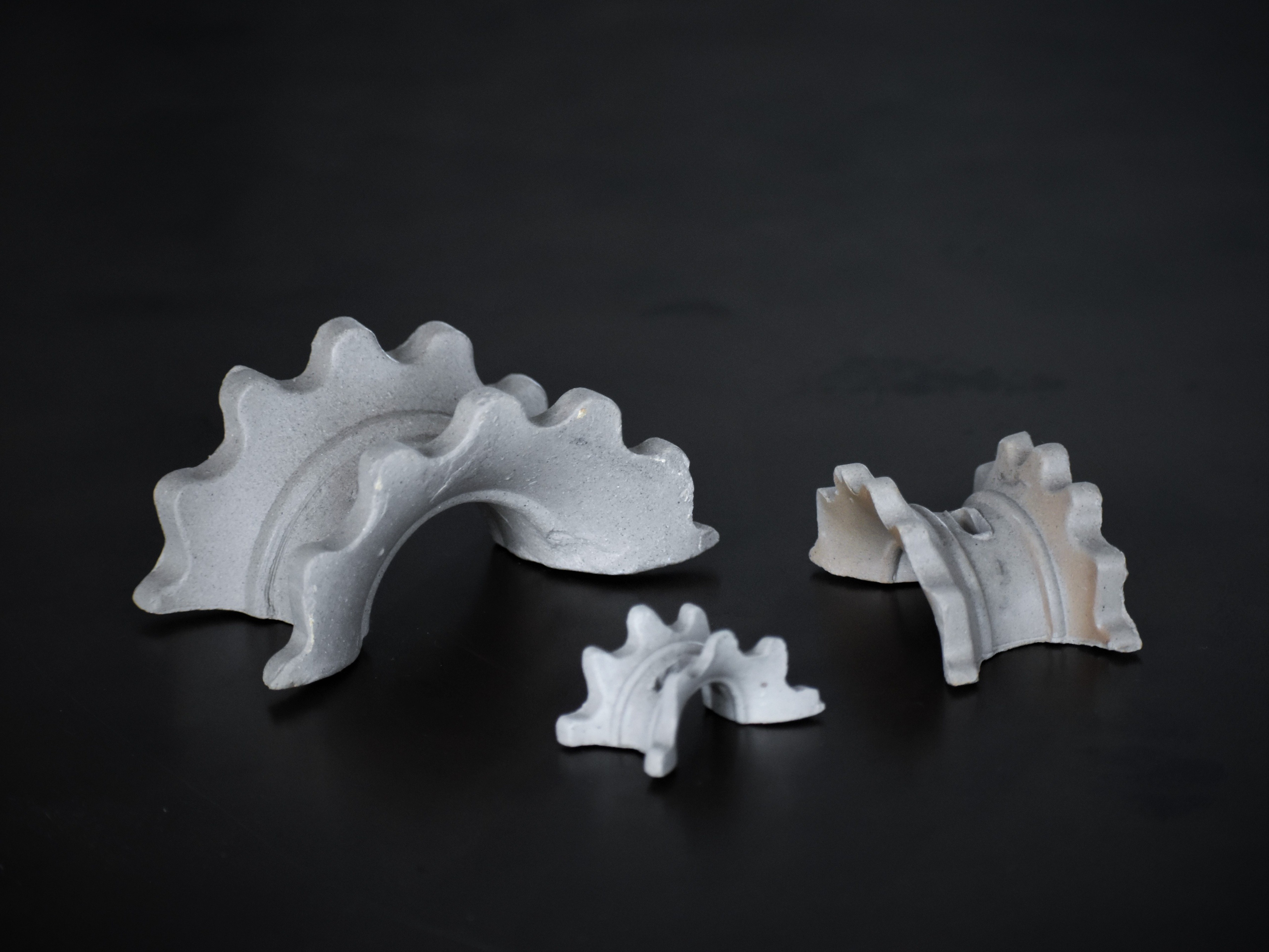
Hydraulic Revolution: Advanced SS 316 IMTP Saddles vs. Traditional Pall Rings for Vietnam’s Process Industries When designing or retrofitting a packed column, selecting the correct random tower packing geometry is a critical factor in determining your plant's throughput and profitability. Across Vietnam’s rapidly modernizing industrial landscape—from the heavy refining and petrochemical units in Nghi Son and Dung Quat to the aggressive chemical processing, fertilizer, and solvent reclamation plants in Binh Duong and Bac Ninh—engineers face a frequent technical dilemma: Should we stick with industry-standard Pall Rings, or upgrade to high-performance IMTP (Intalox Metal Tower Packing) Saddles? While both options represent a substantial improvement over first-generation, solid-walled Raschig rings, they belong to different technological eras. To assist process engineers and procurement teams across Vietnam in optimizing their mass transfer infrastructure, Aera Engineering Pvt Ltd has put together this comprehensive technical and fluid-dynamic comparison between SS 316 IMTP Saddles and SS 316 Pall Rings. 1. Structural Geometries: Two Approaches to Mass Transfer To understand the shifting hydraulic capacities of these two configurations, we must analyze how their mechanical designs interact with rising vapors and descending liquids. Traditional SS 316 Pall Rings The Pall Ring is an open-walled cylindrical packing featuring a height-to-diameter ratio of 1:1. It modifies the classic Raschig ring by incorporating two rows of internally punched tabs or 'fingers' that project inward, along with corresponding open 'windows' on the outer wall. While these internal fingers increase structural surface area and improve vapor flow over older rings, the outer profile remains a rigid, closed-arc cylinder. Advanced SS 316 IMTP Saddles Third-generation IMTP random packing moves away from cylindrical limits entirely. It blends the aerodynamic shape of a saddle with the open structural elements of a high-efficiency ring. Rather than utilization of a solid metal face, IMTP configurations feature a unique open profile with strategically stamped windows, curved internal fingers, and flanged structural edges. 2. Head-to-Head Fluid-Dynamic Performance Matrix The geometric differences between these two shapes translate directly into shifting column limits, pressure spikes, and total separation efficiencies. Pressure Drop and Volumetric Throughput Pall Rings: The cylindrical walls present an abrupt physical profile to rising gas velocities. As vapor rates climb, gas molecules experience high drag against the cylinder faces, driving up column differential pressure (dP). IMTP Saddles: Thanks to their aerodynamic layout, IMTP saddles achieve an exceptionally high bed void fraction (ranging between 96% and 98%). Vapors pass through the bed smoothly, resulting in an approximate 30% reduction in operating pressure drop compared to identical volumetric configurations of Pall Rings. In vacuum distillation loops, minimizing pressure drop is vital to keeping base column temperatures low, directly preventing the thermal degradation of sensitive product fractions. The Problem of Bed Nesting and Channeling Pall Rings: Under the intense downward physical weight of deep beds, cylindrical shapes can tilt, align, and form restrictive channels. This creates 'dry zones' where descending liquids bypass gas streams entirely, migrating down the tower shell (liquid channeling). IMTP Saddles: The flanged structural edges and specialized curves of an IMTP saddle completely eliminate the risk of element 'nesting' or interlocking. Even when packed under deep-bed depths, elements maintain a perfectly uniform, randomized void space across the entire cross-sectional area of the tower. Mass Transfer Efficiency and Lower HETP Pall Rings: Liquids form stable films across the inner tabs and outer walls. While functional, the surface film renewal rate is steady, requiring a higher vertical bed depth to achieve a single theoretical equilibrium stage. IMTP Saddles: As process fluids trickle through an IMTP bed, the punched slots and curved internal fingers continuously slice, shear, and redistribute the descending streams. This relentless physical point-disruption forces a persistent renewal of the gas-liquid phase boundary layer, maximizing mass transfer kinetics and providing a significantly lower HETP (Height Equivalent to a Theoretical Plate). Technical Comparison Snapshot Performance Metric Traditional SS 316 Pall Ring Advanced SS 316 IMTP Saddle Geometric Configuration Closed-profile cylinder with punched tabs. Aerodynamic flanged saddle with open windows. Bed Void Fraction High (~92% to 94%). Exceptionally High (~96% to 98%). Relative Pressure Drop Baseline standard. ~30% Lower than Pall Rings. Risk of Element Nesting Moderate (Prone to alignment under loads). Zero (Engineered to completely prevent nesting). HETP Separation Efficiency Standard capability. Significantly Reduced (Shorter tower bed required). Hydraulic Capacity Limit Standard ceiling. Extended (Handles high vapor/liquid ratios). 3. The SS 316 Metallurgy Standard: Engineered for Aggressive Environments While geometric design dictates fluid-dynamic capacity, your material of construction (MOC) governs long-term survival. For high-severity applications across Vietnam, specifying Stainless Steel 316 (SS 316) is vital for continuous tower runtime. SS 316 is formulated with 16–18% Chromium, 10–14% Nickel, and 2–3% Molybdenum. This chemical configuration delivers critical mechanical advantages over standard grade steels: Robust Defense Against Chloride Pitting: Many of Vietnam’s major industrial clusters are stationed in coastal economic zones where ambient air is rich in marine chlorides. When portside moisture interacts with aggressive process vapors (such as sour gas or organic acids), standard stainless steels suffer from rapid pitting. The molybdenum content in SS 316 forms a robust barrier against chloride attacks, preventing micro-fractures and premature material thinning. Structural Integrity Under High Thermal Stress: High-purity solvent stripping, multi-product chemical synthesis, and vacuum fractionations undergo intense, shifting thermal patterns (up to 400°C). Unlike plastic media that softens or ceramic options that fracture under mechanical thermal shock, SS 316 IMTP saddles maintain their precise dimensions over decades of service. 4. Landed Export and Logistical Support to Vietnam Sourcing your mass transfer internals directly from an international manufacturer like Aera Engineering Pvt Ltd optimizes procurement cycles (CAPEX) and ensures absolute material traceability, eliminating middle-tier trading company markups common within regional distributor networks. Strategic Maritime Routing: We coordinate direct sea freight shipping lanes from our advanced production facilities straight to Vietnam’s vital maritime gateways: Ho Chi Minh City Port (Cat Lai) for southern chemical arrays, Hai Phong Port for northern electronics/chemical loops, and Da Nang Port for central operations. Sea-Worthy Preservation Packing: Tower internals are highly sensitive to physical deformation and marine salt spray during ocean transit. All bulk batches are securely packed in export-worthy, heavy-duty boxes, reinforced with steel strapping, and plastic-wrapped on pallets to guarantee pristine dimensional geometry upon arrival at your site. Clearance-Ready Regulatory Documentation: To ensure zero delays at customs checkpoints during tight turnaround windows, every export shipment includes complete validation documentation: clean Bills of Lading, precise packing lists, Certificates of Origin (COO), raw material heat numbers, and full metallurgical Mill Test Certificates (MTC). Partner with Aera Engineering Pvt Ltd Achieving razor-thin process tolerances and maximizing your column throughput demands a manufacturing partner fully committed to material verification and dimensional precision. At Aera Engineering Pvt Ltd, our advanced sheet-metal pressing operations utilize rigorous quality control frameworks at every production stage—from incoming raw coil tracking to final Positive Material Identification (PMI) verification—to ensure your random tower packing perfectly matches global ISO quality regulations and engineering requirements. Maximize Your Column Capacity Today Let our engineering specialists assist you in minimizing column pressure drops and boosting processing capacity. Contact our technical sales division today for detailed sizing logs, engineering data charts, or a direct commercial proposal tailored to your plant criteria. Corporate Website: www.aeraepl.com / www.randomtowerpacking.com Official Inquiries: tanish@aeraepl.com / gowdashankar4@gmail.com / info@randomtowerpacking.com Direct Hotline: +91 97377 73751 / +91 97310 53731 Manufacturing Hub: Shed No - 75, Aatmiya Brookfieldz Industrial Park, Por, Vadodara, Gujarat, India - 391243


This is your website preview.
Currently it only shows your basic business info. Start adding relevant business details such as description, images and products or services to gain your customers attention by using Boost 360 android app / iOS App / web portal.
SS 316 IMTP Saddle vs Pall Rings Vietnam
2026-06-09T07:00:21
Hydraulic Revolution: Advanced SS 316 IMTP Saddles vs. Traditional Pall Rings for Vietnam’s Process Industries When designing or retrofitting a packed column, selecting the correct random tower packing geometry is a critical factor in determining your plant's throughput and profitability. Across Vietnam’s rapidly modernizing industrial landscape—from the heavy refining and petrochemical units in Nghi Son and Dung Quat to the aggressive chemical processing, fertilizer, and solvent reclamation plants in Binh Duong and Bac Ninh—engineers face a frequent technical dilemma: Should we stick with industry-standard Pall Rings, or upgrade to high-performance IMTP (Intalox Metal Tower Packing) Saddles? While both options represent a substantial improvement over first-generation, solid-walled Raschig rings, they belong to different technological eras. To assist process engineers and procurement teams across Vietnam in optimizing their mass transfer infrastructure, Aera Engineering Pvt Ltd has put together this comprehensive technical and fluid-dynamic comparison between SS 316 IMTP Saddles and SS 316 Pall Rings. 1. Structural Geometries: Two Approaches to Mass Transfer To understand the shifting hydraulic capacities of these two configurations, we must analyze how their mechanical designs interact with rising vapors and descending liquids. Traditional SS 316 Pall Rings The Pall Ring is an open-walled cylindrical packing featuring a height-to-diameter ratio of 1:1. It modifies the classic Raschig ring by incorporating two rows of internally punched tabs or 'fingers' that project inward, along with corresponding open 'windows' on the outer wall. While these internal fingers increase structural surface area and improve vapor flow over older rings, the outer profile remains a rigid, closed-arc cylinder. Advanced SS 316 IMTP Saddles Third-generation IMTP random packing moves away from cylindrical limits entirely. It blends the aerodynamic shape of a saddle with the open structural elements of a high-efficiency ring. Rather than utilization of a solid metal face, IMTP configurations feature a unique open profile with strategically stamped windows, curved internal fingers, and flanged structural edges. 2. Head-to-Head Fluid-Dynamic Performance Matrix The geometric differences between these two shapes translate directly into shifting column limits, pressure spikes, and total separation efficiencies. Pressure Drop and Volumetric Throughput Pall Rings: The cylindrical walls present an abrupt physical profile to rising gas velocities. As vapor rates climb, gas molecules experience high drag against the cylinder faces, driving up column differential pressure (dP). IMTP Saddles: Thanks to their aerodynamic layout, IMTP saddles achieve an exceptionally high bed void fraction (ranging between 96% and 98%). Vapors pass through the bed smoothly, resulting in an approximate 30% reduction in operating pressure drop compared to identical volumetric configurations of Pall Rings. In vacuum distillation loops, minimizing pressure drop is vital to keeping base column temperatures low, directly preventing the thermal degradation of sensitive product fractions. The Problem of Bed Nesting and Channeling Pall Rings: Under the intense downward physical weight of deep beds, cylindrical shapes can tilt, align, and form restrictive channels. This creates 'dry zones' where descending liquids bypass gas streams entirely, migrating down the tower shell (liquid channeling). IMTP Saddles: The flanged structural edges and specialized curves of an IMTP saddle completely eliminate the risk of element 'nesting' or interlocking. Even when packed under deep-bed depths, elements maintain a perfectly uniform, randomized void space across the entire cross-sectional area of the tower. Mass Transfer Efficiency and Lower HETP Pall Rings: Liquids form stable films across the inner tabs and outer walls. While functional, the surface film renewal rate is steady, requiring a higher vertical bed depth to achieve a single theoretical equilibrium stage. IMTP Saddles: As process fluids trickle through an IMTP bed, the punched slots and curved internal fingers continuously slice, shear, and redistribute the descending streams. This relentless physical point-disruption forces a persistent renewal of the gas-liquid phase boundary layer, maximizing mass transfer kinetics and providing a significantly lower HETP (Height Equivalent to a Theoretical Plate). Technical Comparison Snapshot Performance Metric Traditional SS 316 Pall Ring Advanced SS 316 IMTP Saddle Geometric Configuration Closed-profile cylinder with punched tabs. Aerodynamic flanged saddle with open windows. Bed Void Fraction High (~92% to 94%). Exceptionally High (~96% to 98%). Relative Pressure Drop Baseline standard. ~30% Lower than Pall Rings. Risk of Element Nesting Moderate (Prone to alignment under loads). Zero (Engineered to completely prevent nesting). HETP Separation Efficiency Standard capability. Significantly Reduced (Shorter tower bed required). Hydraulic Capacity Limit Standard ceiling. Extended (Handles high vapor/liquid ratios). 3. The SS 316 Metallurgy Standard: Engineered for Aggressive Environments While geometric design dictates fluid-dynamic capacity, your material of construction (MOC) governs long-term survival. For high-severity applications across Vietnam, specifying Stainless Steel 316 (SS 316) is vital for continuous tower runtime. SS 316 is formulated with 16–18% Chromium, 10–14% Nickel, and 2–3% Molybdenum. This chemical configuration delivers critical mechanical advantages over standard grade steels: Robust Defense Against Chloride Pitting: Many of Vietnam’s major industrial clusters are stationed in coastal economic zones where ambient air is rich in marine chlorides. When portside moisture interacts with aggressive process vapors (such as sour gas or organic acids), standard stainless steels suffer from rapid pitting. The molybdenum content in SS 316 forms a robust barrier against chloride attacks, preventing micro-fractures and premature material thinning. Structural Integrity Under High Thermal Stress: High-purity solvent stripping, multi-product chemical synthesis, and vacuum fractionations undergo intense, shifting thermal patterns (up to 400°C). Unlike plastic media that softens or ceramic options that fracture under mechanical thermal shock, SS 316 IMTP saddles maintain their precise dimensions over decades of service. 4. Landed Export and Logistical Support to Vietnam Sourcing your mass transfer internals directly from an international manufacturer like Aera Engineering Pvt Ltd optimizes procurement cycles (CAPEX) and ensures absolute material traceability, eliminating middle-tier trading company markups common within regional distributor networks. Strategic Maritime Routing: We coordinate direct sea freight shipping lanes from our advanced production facilities straight to Vietnam’s vital maritime gateways: Ho Chi Minh City Port (Cat Lai) for southern chemical arrays, Hai Phong Port for northern electronics/chemical loops, and Da Nang Port for central operations. Sea-Worthy Preservation Packing: Tower internals are highly sensitive to physical deformation and marine salt spray during ocean transit. All bulk batches are securely packed in export-worthy, heavy-duty boxes, reinforced with steel strapping, and plastic-wrapped on pallets to guarantee pristine dimensional geometry upon arrival at your site. Clearance-Ready Regulatory Documentation: To ensure zero delays at customs checkpoints during tight turnaround windows, every export shipment includes complete validation documentation: clean Bills of Lading, precise packing lists, Certificates of Origin (COO), raw material heat numbers, and full metallurgical Mill Test Certificates (MTC). Partner with Aera Engineering Pvt Ltd Achieving razor-thin process tolerances and maximizing your column throughput demands a manufacturing partner fully committed to material verification and dimensional precision. At Aera Engineering Pvt Ltd, our advanced sheet-metal pressing operations utilize rigorous quality control frameworks at every production stage—from incoming raw coil tracking to final Positive Material Identification (PMI) verification—to ensure your random tower packing perfectly matches global ISO quality regulations and engineering requirements. Maximize Your Column Capacity Today Let our engineering specialists assist you in minimizing column pressure drops and boosting processing capacity. Contact our technical sales division today for detailed sizing logs, engineering data charts, or a direct commercial proposal tailored to your plant criteria. Corporate Website: www.aeraepl.com / www.randomtowerpacking.com Official Inquiries: tanish@aeraepl.com / gowdashankar4@gmail.com / info@randomtowerpacking.com Direct Hotline: +91 97377 73751 / +91 97310 53731 Manufacturing Hub: Shed No - 75, Aatmiya Brookfieldz Industrial Park, Por, Vadodara, Gujarat, India - 391243
2026-06-09T07:00:21


Submit Your Enquiry