
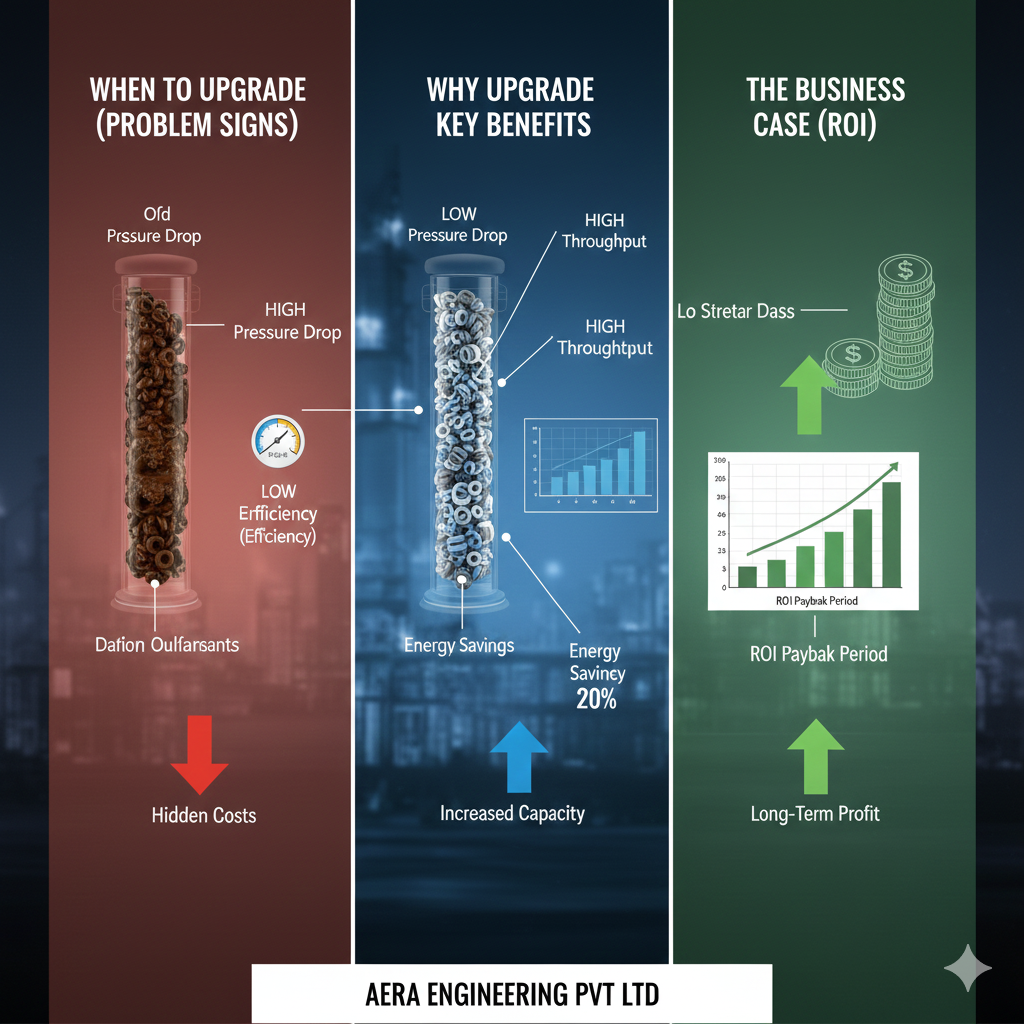
This blog targets decision-makers and engineers looking for justification to invest in new packing. The Real Cost of Sub-Optimal Packing Many plants operate with older, less efficient random packing, unaware of the hidden costs. These costs include higher energy consumption, reduced throughput, and frequent maintenance. Key Indicators for an Upgrade Consistently High Pressure Drop: If your blowers/pumps are constantly working harder, it's a sign of inefficient packing. Reduced Product Purity/Yield: Lower mass transfer efficiency means your column isn't achieving its full separation potential. Frequent Fouling/Plugging: Excessive downtime for cleaning is a major operational drain. Capacity Bottleneck: If your plant needs to increase throughput but the column is a limiting factor. Benefits of Upgrading to Modern Packing Significant Energy Savings: Modern designs (e.g., high-performance saddles or rings) dramatically lower pressure drop. Increased Throughput: Higher capacity packing allows for more flow without flooding. Improved Product Quality: Enhanced mass transfer leads to better separation. Reduced Maintenance: Fouling-resistant designs mean less cleaning and downtime. Making the Business Case Perform a simple ROI calculation comparing current operational costs with potential savings from a packing upgrade. Consider the long-term impact on profitability and environmental compliance.


This is your website preview.
Currently it only shows your basic business info. Start adding relevant business details such as description, images and products or services to gain your customers attention by using Boost 360 android app / iOS App / web portal.
The Cost-Benefit Analysis: When to Upgrade Your Random Packing (and Why)
2026-01-01T06:30:01
This blog targets decision-makers and engineers looking for justification to invest in new packing. The Real Cost of Sub-Optimal Packing Many plants operate with older, less efficient random packing, unaware of the hidden costs. These costs include higher energy consumption, reduced throughput, and frequent maintenance. Key Indicators for an Upgrade Consistently High Pressure Drop: If your blowers/pumps are constantly working harder, it's a sign of inefficient packing. Reduced Product Purity/Yield: Lower mass transfer efficiency means your column isn't achieving its full separation potential. Frequent Fouling/Plugging: Excessive downtime for cleaning is a major operational drain. Capacity Bottleneck: If your plant needs to increase throughput but the column is a limiting factor. Benefits of Upgrading to Modern Packing Significant Energy Savings: Modern designs (e.g., high-performance saddles or rings) dramatically lower pressure drop. Increased Throughput: Higher capacity packing allows for more flow without flooding. Improved Product Quality: Enhanced mass transfer leads to better separation. Reduced Maintenance: Fouling-resistant designs mean less cleaning and downtime. Making the Business Case Perform a simple ROI calculation comparing current operational costs with potential savings from a packing upgrade. Consider the long-term impact on profitability and environmental compliance.
2026-01-01T06:30:01


Submit Your Enquiry